
TODAY -


SOS to all, hunger pangs strike CCpur district
First hand account of the starving villagers
Source: The Sangai Express
Even as a team of district officials led by Deputy Commissioner of Churachandpur district Sumant Singh has conducted a spot assessment of the villages affected by bamboo flowering across the district, the woes of the famine victims have been exacerbating with each passing day as their meagre food stock is fast running out.
Meanwhile, DC Sumant Singh has called upon the villagers to combat the natural calamity with the help of the National Rural Employment Guarantee Scheme (NREGS).
Contrary to the claims of the Government that several rodent control measures have been initiated, an exclusive survey by The Sangai Express has found that there is no sign of any such measure to prevent starvation of the people.
During an extensive tour by this reporter across several villages in Churachandpur district it was found that many families are subsisting on boiled Paan and Hah while many other families have to forgo either lunch or dinner every day.
After hailstorm had destroyed large fields of paddy plants in the four sub-divisions in September last year, the sudden spurt in rodent population following the bamboo flowering phenomena caused havoc to standing crops which were then ready for harvesting.
The plight of the villagers whose main source of staple food comes from jhum cultivation was again aggravated when a large number of wild pigs started feeding on the paddy plants.
Due to all these repeated devastations, the villagers could reap just a small fraction of their normal annual harvest.
Of the total 54 villages in Tipaimukh sub-division, 43 have been hit by famine affecting 32,532 people directly.
Against the total 51 villages in Thanlon sub-division, 14,115 people of 39 villages are under the grip of the starvation.
In Henglep sub-division, 32 villages out of 150 have been affected throwing 9115 people into the indignity of starvation.
Out of total 92 villages in Singhat sub-division, 2536 people of 18 villages are also enduring the harsh reality of famine.
DC Sumant Singh observed that the number of villages and people affected by the natural calamity will increase in the days to come.
On the other hand, of the total agricultural produces of Churachandpur district, rice constituted 57 percent in 2003.But this was reduced to just 15 percent in 2007 .
Taking into account the sharp decline in food grain production in Churachandpur district and the fall in annual rice harvest in the four sub-divisions by 85 percent, the district requires an additional 45,328 metric tonnes of rice, said a source in the District Agricultural Office.
In the course of the investigation undertaken by The Sangai Express, it was discovered that rice was not available in all the shops except those opened in subdivisional headquarters and at a few isolated places across the four sub-divisions.
In some villages, the BPL rice which cost Rs 6.10 per kg at Government rate was found sold at Rs 10 per kg.
The demand for immediate provision of rice was a common and frantic cry of all the villagers.
A house to house survey found that some families had just 5 kgs and some others 20 kgs to last the whole season.
No one visiting these villages could ignore the weary eyes of the hapless villagers reflecting the fear and indignity of starvation.
A large number of families with their annual harvest already exhausted, were found subsisting on Paan and Hah.
Interacting with this reporter, 40 year old Dongkhuwal of Mual Nuam village located along Guite road lamented that from one tin and a half of rice he sowed last year, he could harvest just one tin of rice after the paddy fields were devastated by rodents.
He is living on the little money he got from offering his service to lift/carry timber, disclosed Dongkhuwal.
"I often substitute my meal with boiled Paan.
Even though I can earn a few rupees, I cannot have rice for the grain is not available in the village," he conveyed.
Following the bamboo flowering, the Government provided some chemicals to kill rats to just three individuals of the village.
Questioning whether such measures can fight the rodent menace, Dongkhuwal asserted that he could not observe any step claimed to have been taken up by the Government to fight the natural phenomenon.
Nevertheless, he acknowledged that he received 20 kgs of rice under Public Distribution System twice.
For the villagers living more than 150 kms away from Churachandpur Bazar where there is no regular transport system except for a few trucks on rare occasions, they have to spend at least Rs 300 on travel fare just to buy 10 kgs of rice from the district headquarters.
One Thangkhasuam (25) of Laijangphai village located along Churachandpur-Tipaimukh road said that he has been living with his mother and a younger brother.
Last year, his younger brother was sent to Thanlon for his education.
But this year, with famine staring at their faces, the family is unable to afford the school fees and as a result the younger brother has dropped out.
Many of the villagers also expressed their strong desire for the Government to take up certain pragmatic long term measures so that the villagers can have some sources of income from cultivating ginger, banana, broom plants, chillies etc which are grown abundantly in their villages.
Marketing the produce is important, they stressed.
Meanwhile, a team of district officials including DC Sumant Singh, SP S Manglemjao, 3rd IRB CO P Dhiren and CDSU members conducted spot assessment visiting the famine hit villages from February 8 to 10.After assessing the affected villages, the DC reportedly asked the villagers to combat the natural calamity under with NREGS.
At all the villages, the official team led by the DC was greeted by the cries for free distribution of rice.
During his random enquiry in some families, the DC was shown 10/20 kgs of rice saying that it was all they had.
To make up for the food grain scarcity in the villages, the State Government has planned to provide 50 kgs of rice per month to each household, declared Sumant Singh.
Under the Government's plan, 50 percent of the wages entitled to villagers under the NREGS will be deducted by the village authorities and submitted to the Government.
The Government will buy rice with the money deducted from the wages of the labourers and the same will be distributed to the famine affected villagers, explained the DC.
Observing that the famine may become more disastrous if the Government fails to take up necessary actions immediately, the DC also appealed to all civil organisations for generous help to the famine victims.
The State Government has already established 25 village grain banks in 25 villages of Churachandpur district.
 Comment
First hand account of the starving villagers
Source: The Sangai Express
Thanlon, February 11:
The apprehension of a famine has become a harsh reality today in the four sub-divisions of Tipaimukh, Thanlon, Henglep and Singhat in Churachandpur district.
With most of the villagers reeling under the harsh reality, sending children to schools has become a non-affordable task for a great number of families.
While the victims of the natural bamboo flowering phenomenon are wistfully looking up to the Government for some concrete measures to tide over their misfortune, many opined that in case the State Government and relevant authorities fail to take up relief and famine control measures immediately, the crisis may deepen and ultimately lead to a major human disaster.
|
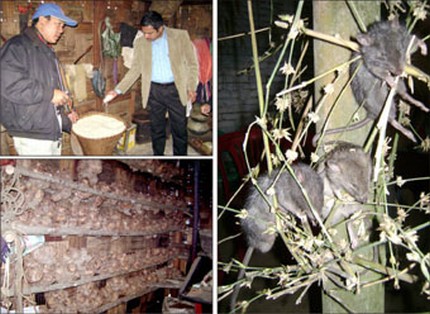
Even as a team of district officials led by Deputy Commissioner of Churachandpur district Sumant Singh has conducted a spot assessment of the villages affected by bamboo flowering across the district, the woes of the famine victims have been exacerbating with each passing day as their meagre food stock is fast running out.
Meanwhile, DC Sumant Singh has called upon the villagers to combat the natural calamity with the help of the National Rural Employment Guarantee Scheme (NREGS).
Contrary to the claims of the Government that several rodent control measures have been initiated, an exclusive survey by The Sangai Express has found that there is no sign of any such measure to prevent starvation of the people.
During an extensive tour by this reporter across several villages in Churachandpur district it was found that many families are subsisting on boiled Paan and Hah while many other families have to forgo either lunch or dinner every day.
After hailstorm had destroyed large fields of paddy plants in the four sub-divisions in September last year, the sudden spurt in rodent population following the bamboo flowering phenomena caused havoc to standing crops which were then ready for harvesting.
The plight of the villagers whose main source of staple food comes from jhum cultivation was again aggravated when a large number of wild pigs started feeding on the paddy plants.
Due to all these repeated devastations, the villagers could reap just a small fraction of their normal annual harvest.
Of the total 54 villages in Tipaimukh sub-division, 43 have been hit by famine affecting 32,532 people directly.
Against the total 51 villages in Thanlon sub-division, 14,115 people of 39 villages are under the grip of the starvation.
In Henglep sub-division, 32 villages out of 150 have been affected throwing 9115 people into the indignity of starvation.
Out of total 92 villages in Singhat sub-division, 2536 people of 18 villages are also enduring the harsh reality of famine.
DC Sumant Singh observed that the number of villages and people affected by the natural calamity will increase in the days to come.
On the other hand, of the total agricultural produces of Churachandpur district, rice constituted 57 percent in 2003.But this was reduced to just 15 percent in 2007 .
Taking into account the sharp decline in food grain production in Churachandpur district and the fall in annual rice harvest in the four sub-divisions by 85 percent, the district requires an additional 45,328 metric tonnes of rice, said a source in the District Agricultural Office.
In the course of the investigation undertaken by The Sangai Express, it was discovered that rice was not available in all the shops except those opened in subdivisional headquarters and at a few isolated places across the four sub-divisions.
In some villages, the BPL rice which cost Rs 6.10 per kg at Government rate was found sold at Rs 10 per kg.
The demand for immediate provision of rice was a common and frantic cry of all the villagers.
A house to house survey found that some families had just 5 kgs and some others 20 kgs to last the whole season.
No one visiting these villages could ignore the weary eyes of the hapless villagers reflecting the fear and indignity of starvation.
A large number of families with their annual harvest already exhausted, were found subsisting on Paan and Hah.
Interacting with this reporter, 40 year old Dongkhuwal of Mual Nuam village located along Guite road lamented that from one tin and a half of rice he sowed last year, he could harvest just one tin of rice after the paddy fields were devastated by rodents.
He is living on the little money he got from offering his service to lift/carry timber, disclosed Dongkhuwal.
"I often substitute my meal with boiled Paan.
Even though I can earn a few rupees, I cannot have rice for the grain is not available in the village," he conveyed.
Following the bamboo flowering, the Government provided some chemicals to kill rats to just three individuals of the village.
Questioning whether such measures can fight the rodent menace, Dongkhuwal asserted that he could not observe any step claimed to have been taken up by the Government to fight the natural phenomenon.
Nevertheless, he acknowledged that he received 20 kgs of rice under Public Distribution System twice.
For the villagers living more than 150 kms away from Churachandpur Bazar where there is no regular transport system except for a few trucks on rare occasions, they have to spend at least Rs 300 on travel fare just to buy 10 kgs of rice from the district headquarters.
One Thangkhasuam (25) of Laijangphai village located along Churachandpur-Tipaimukh road said that he has been living with his mother and a younger brother.
Last year, his younger brother was sent to Thanlon for his education.
But this year, with famine staring at their faces, the family is unable to afford the school fees and as a result the younger brother has dropped out.
Many of the villagers also expressed their strong desire for the Government to take up certain pragmatic long term measures so that the villagers can have some sources of income from cultivating ginger, banana, broom plants, chillies etc which are grown abundantly in their villages.
Marketing the produce is important, they stressed.
Meanwhile, a team of district officials including DC Sumant Singh, SP S Manglemjao, 3rd IRB CO P Dhiren and CDSU members conducted spot assessment visiting the famine hit villages from February 8 to 10.After assessing the affected villages, the DC reportedly asked the villagers to combat the natural calamity under with NREGS.
At all the villages, the official team led by the DC was greeted by the cries for free distribution of rice.
During his random enquiry in some families, the DC was shown 10/20 kgs of rice saying that it was all they had.
To make up for the food grain scarcity in the villages, the State Government has planned to provide 50 kgs of rice per month to each household, declared Sumant Singh.
Under the Government's plan, 50 percent of the wages entitled to villagers under the NREGS will be deducted by the village authorities and submitted to the Government.
The Government will buy rice with the money deducted from the wages of the labourers and the same will be distributed to the famine affected villagers, explained the DC.
Observing that the famine may become more disastrous if the Government fails to take up necessary actions immediately, the DC also appealed to all civil organisations for generous help to the famine victims.
The State Government has already established 25 village grain banks in 25 villages of Churachandpur district.
Comment* Comments posted by users in this discussion thread and other parts of this site are opinions of the individuals posting them (whose user ID is displayed alongside) and not the views of e-pao.net. We strongly recommend that users exercise responsibility, sensitivity and caution over language while writing your opinions which will be seen and read by other users. Please read a complete Guideline on using comments on this website.


HEADLINES - 12, FEB 2008
SPORTS - 12, FEB 2008
LATEST IN E-PAO.NET
Jump Start
DBS Imphal SubSite |
Readers Mail |
Editorials |
Education Announcements |
Essay |
Exclusive Event |
Flash - Audio Visual |
Incidents |
LFS Imphal SubSite |
News Timeline |
Poetry |
Opinion |
Sports |
Rock Concert |
RSS |
Top Stories |
Wathi Jugai