


Questions raised on quality and safety of imported phabou nga, ngari
Source: The Sangai Express
Imphal, August 08 2025:
Even as ngari (fermented fish) is deeply rooted in the dietary habits of the State, there is a growing concern regarding the primary raw material used in ngari production - phabou nga (Puntius sophore) .
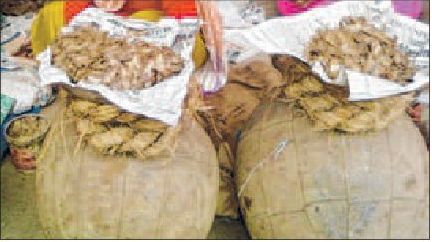
Despite ngari's cultural and economic significance, Manipur relies heavily on imported phabou nga from States/places like Assam, Gujarat, Siliguri and Tripura.
These phabou nga, after fermentation, are widely consumed as ngari in households across the State.
However, the lack of regulation and testing of imported fish raises alarm, as externally sourced phabou nga may be preserved or treated with harmful chemicals.
According to reports received by The Sangai Express, there is no indication of relevant authorities checking if any chemical is used in drying and fermenting phabou nga, which could have serious implications for public health.
|
It is reported that the FSSAI license for ngari namba (traditional fermentation process of ngari) is granted after collecting ngari samples and obtaining approval from a laboratory accredited by the National Accreditation Board for Testing and Calibration Laboratories.
Some experts familiar with the matter, however, expressed concerns that a single sample may not be sufficient to guarantee the safety of ngari produced for market consumption, as it is an indispensable component of most Manipuri dishes.
They emphasized that ngari production should be regularly monitored, ideally on a weekly or monthly basis, to ensure quality and safety standards are met.
They also said that rigorous checks on imported phabou nga are crucial to safeguard public health, given the potential for widespread harm if contaminated products enter the market.
They further pointed out that many ngari producers operate without obtaining the necessary FSSAI license, and their products are not subjected to required safety checks.
Another concerning factor is Manipur's heavy reliance on phabou nga from other States, which not only incurs significant expenditure but also hinders the State's efforts to achieve food self-sufficiency.
Unfortunately, the Fishery Department appears to be inactive in promoting local phabou nga production to meet the demand.
Some ngari traders said that phabou nga brought in via Tripura (sourced from Bangladesh) are particularly sought after for their distinct flavour.
According to them, a bag of phabou nga typically weighs between 50 to 70 kilograms.
The traders explained that producing 100 earthen pots (locally known as Kharung) of ngari requires approximately 270 bags of phabou nga, and with local production falling short of demand, sourcing phabou nga from other States is their only viable option.
They also pointed out that phabou nga sourced from other States is much cheaper compared to locally produced phabou nga.
A fish farmer noted that phabou nga are relatively easy to rear and breed rapidly, but the challenge lies in producing ngari, which requires a massive quantity of fish.
He said that increasing the production of phabou nga requires substantial fish feeds, which are also sourced from other States.
Consequently, the price of locally produced fish is naturally higher due to the added cost of sourcing feed from other States, he reasoned and added that the ngari traders prefer cheaper ingredients.
Why would anyone want to farm phabou nga if traders prefer cheaper alternatives? he asked, while expressing his support for promoting local phabou nga production.
He advocated for a collaborative effort between local fish farmers and ngari traders.
 Comment

