


NIA makes second arrest in Jiribam hostage killing case
Source: Chronicle News Service
Imphal, August 02 2025:
National Investigation Agency (NIA) announced the arrest of a second key accused in the 2024 Jiribam hostage killings, intensifying a bitter debate over accountability and bias in Manipur's protracted ethnic conflict.
Lalrosang Hmar was taken into custody in Aizawl, Mizoram, days after the arrest of Thanglienlal Hmar alias Boya, in what central investigators described as consecutive breakthroughs in the case involving the abduction and murder of three Meetei women and three children November last year.
Authorities said that they recovered a mobile phone and SIM card from Lalrosang, which are being examined as part of the ongoing investigation.
The earlier arrest of Thanglienlal, a boat operator from Moinathol village, Cachar district of Assam was portrayed by NIA and Assam Police as a critical development after months of surveillance.
Investigators accused him of facilitating the movement of victims and armed assailants, allegedly transporting them across river ghats dressed in camouflage, to the site where the killings occurred.
|
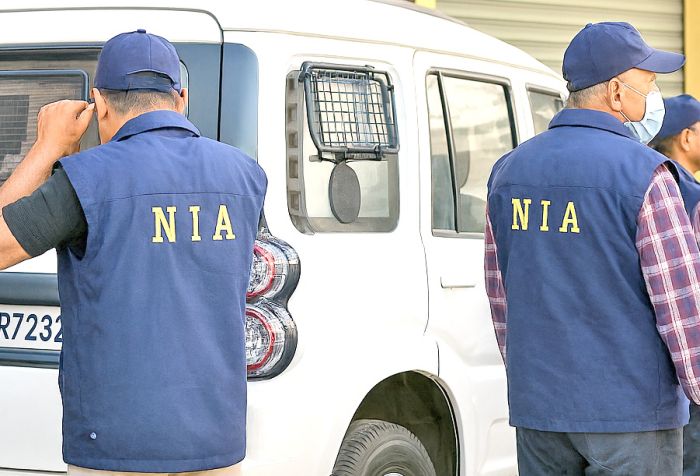
The bodies were later recovered from Barak River, and the incident fuelled the wider cycle of violence between Meetei and Kuki-Zo communities that has left deep scars across the state.
The unfolding probe has added pressure on the justice system.
The High Court of Manipur had earlier demanded timely progress, and the high-profile nature of the case has made it both a symbol of the state's desire for justice and a flashpoint for competing narratives.
While security officials stress the need to dismantle the alleged networks behind the atrocity, community leaders warn that isolated arrests without addressing broader grievances could harden divisions further.
In reaction to the arrest of Thanglienlal, three civil society and ethnic organisations issued sharply contrasting statements that underscored the polarised climate.
Hmar Inpui described him as a lay church leader, a humble boat driver and a father of eight children, asserting that his arrest was a case of misidentification and a flawed investigation.
The group said that no evidence had been made public to substantiate his involvement and called for a fair reinvestigation, immediate release, and compassion for the hardship his family now faces.
The Kuki-Zo Council went further, characterising the arrest as arbitrary and symptomatic of selective justice.
While acknowledging the role of national agencies in maintaining law and order, the council accused authorities of neglecting other unresolved and painful incidents affecting its community, including the rape and murder of a Kuki-Zo woman named Zosangkim, the killings of 10 Hmar "volunteers" in Jiribam, the beheading of David Thiek of Langza village, and the death of Sub-Inspector Onkhomang.
It also criticised the release of those accused in the "Naked Parade" incident even as many Kuki-Zo individuals remained in detention without resolution.
The council framed the arrests as insufficient to bridge the growing chasm between Meetei and Kuki-Zo populations and urged a political settlement that formally recognised the fissures and aimed to secure peace and dignity for both sides.
Responding to the Kuki-Zo Council's statement, the Meitei Heritage Society accused the council of spreading falsehoods to shield what it called "baby killer militants" and undermining the credibility of the investigation.
The society highlighted that Meetei individuals have also been arrested in related cases, including in matters tied to the alleged rape and murder of Zosangkim, and cited ongoing legal action in the "Naked Parade" case.
The organisation condemned what it portrayed as a pattern of denial by the Kuki-Zo side regarding the killings of Meetei women and children, accused community leaders of glorifying perpetrators, and warned that continued propaganda and manipulation would stall any progress toward restoring order.
The killings in Jiribam in November 2024 were among the most brutal episodes in the broader violence that has convulsed Manipur since 2023, prompting large-scale displacement, curfews, and the re-imposition of disturbed area status under the Armed Forces (Special Powers) Act in many areas.
The incident, which involved the abduction of six civilians and their subsequent murder, heightened distrust and triggered retaliatory narratives that have persisted despite periodic calls for dialogue.
The discovery of the six victims' mutilated bodies in November last year ignited widespread outrage and deepened ethnic fault lines in Manipur.
The victims - Yumrembam Rani, Telem Thoibi and her eight-year-old daughter Telem Thajamanbi, Laishram Heithoibi and her two children , 2.5-year-old Laishram Chingkheinganba and 10-month-old Laishram Lamnganba - were displaced by the May 2023 violence and were living in a Borobekra relief camp when militants abducted them.
Their bodies, recovered floating in the Jiri and Barak rivers between November 15 and 18, showed gruesome injuries in autopsy reports which include multiple bullet wounds, stab wounds, blunt trauma, missing brain tissue and eyes, and in the case of the infant, beheading and signs of torture.
A photograph of the hostages circulated on a WhatsApp channel, sparking further public fury, and the state government publicly attributed the killings to Kuki militants.
Survivor Telem Roshan, then a class six student, said that he hid while gunmen stormed his home, seized his family at gunpoint and he escaped after being struck with a rifle butt.
The brutality prompted the transfer of the case to the NIA .
On July 29, the High Court of Manipur granted a final one month extension for the agency to file a chargesheet, hearing a public interest litigation that accused authorities of delay; the division bench called the incident "grave and shocking" and kept sealed progress reports in custody.
 Comment

