TODAY -

Manipuri in Myanmar
- Part 6-

By: Mutua Bahadur *


Language and script

According to the 1931 census report, two out of every three Myanmarese Manipuri can understand and speak Manipuri language. Manipuri-Kates. Kate-Paonas settled at Yangon, around Mandalay, near Amarapura and Sagaing etc. are not using Manipuri language at their homes. So, most of the youths can no longer speak Manipuri language. Manipuri girls have more capability of speaking Manipuri language than boys.

Most of the Manipuri elders can still speak Manipuri language. A maximum number of Manipuri-Kates, including children and women settled by the Ningthi, can speak Manipuri language. Those Manipuris settled around Mandalay called Manipuri language as Ramon-Ion.

An organization named United Meitei Language and Cultural Group" was established at Mandalay on December 1, 1997 in order to impart lessons on Manipuri language at family level. Manipuri Kate-Paonas settled at Yangon has started to teach Manipuri language at Ram Mandir of Pogodong on a weekly basis. But, it cannot be termed a success story.

Some Manipuris of Yangon and Mandalay can write and read Bengali scripts. Names of temples and slokas are still written in Bengali scripts. One interesting thing is that some elders of Mandalay have started to learn to write their own names in archaic Manipuri script (Meitei Mayek).

When Manipuris departed for Myanmar, they took books on Sagei Yumdaba (settlement of clans), Subika Laishaba (illustrated manuscripts that are concerned with the activities of persons born within the twelve months, the whereabouts loss of properties, a particular day for putting up a house etc). These books are written in archaic Manipuri scripts.

They still use not only those hand-written manuscripts but use transcribed manuscripts also. Slowly, Manipuri Kate-Paonas attempted to translate Subika Laishaba into Myanmarese. Manipuri-Kates of Ningthi did not learn Myanmarese language before the Second World War as they believed that it was untouchable. With the passing of time, they started learning it.

Occupation

From an early stage, Manipuris served as cavalry, foot soldiers, indigenous physicians, carpenters, goldsmiths, rowers and weavers etc. under the patronage of the Myanmarese royalty. Manipuri Kate-Paonas served as purohits (priest) and astrologers. At present, the average Myanmarese Manipuri male and women are engaged in trade and commerce.

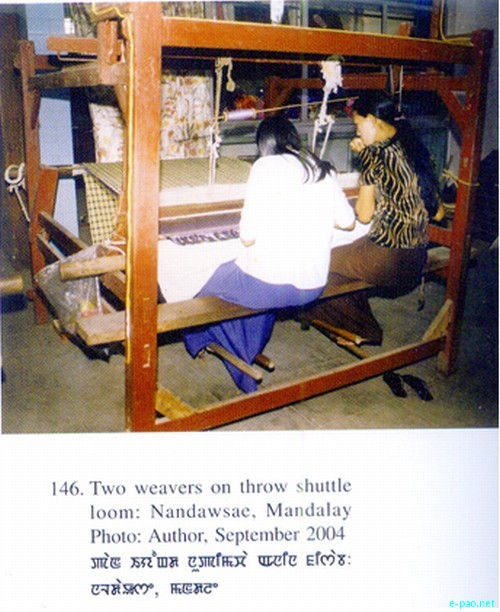
Some men are in government service but some women are found teaching from school to university levels. Women of Nandawsae, Dat Dale, Senga, Latthamar (Kongjengbam Leikai) are weavers, while some male weavers weave plain cloths. Some Manipuri-Kates of Mogok are miners of precious stones. And a large number of Manipuri-Kates settled by the Ningthi do fishing and panning gold from the river bed. Some women of Ningthi bank cross over to Ukhrul district (Manipur : India) and sell clothes and sweets during festivals.

Manipuri textile

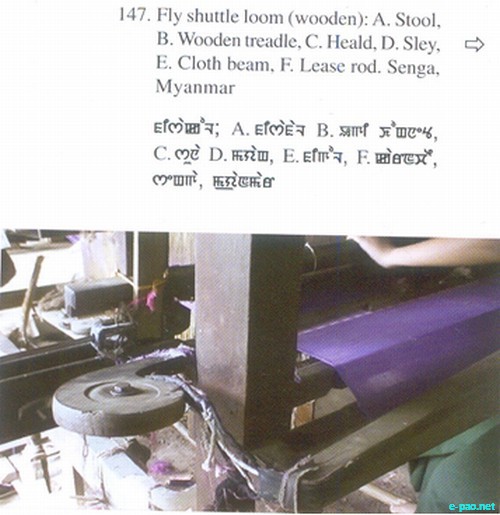
Though the art of textile was already in Myanmar, it developed fast after the Manipuris' settlement there during the 18th century. Manipuri-Kates produced a variety of clothes from khwang-iyong, pan-iyong and fly-shuttle
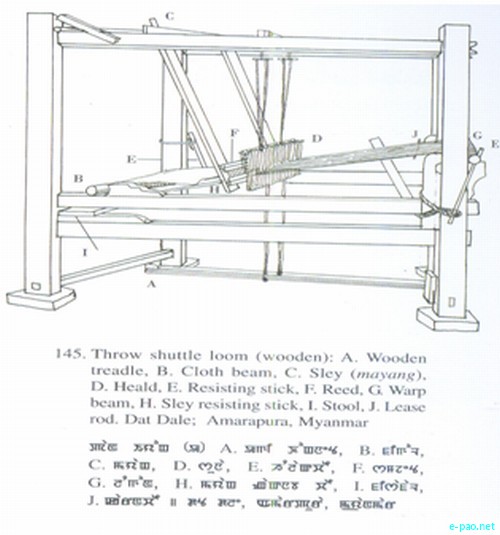


looms. Till 1990 there was the tradition of khwang-iyong. There was a market named 'Zecho' which sold only products of Manipuri-Kates. The word 'zecho' means a market for luxury items and cheap commodities. Usually a Myanmarese will comment like this - "This cloth is fabulous. What is its price?" when she sees a cloth there.

In return Manipuri-Kates give an answer like this - "It costs rupees Rs. 15/- or kyat". In the midst of buying and selling Manipuri language is sometimes spoken. Unfortunately, today, there is no market that sells these products of the Manipuri-Kates.

In Myanmar silk fabrics can be classified into four categories. They are -
i) Bala,
ii) Achiek or Lun
iii) Gaik and
iv) Sat.

The bala fabric is coloured horizontally with colours. The three other fabrics have designs among the horizontal lines. The second one Achiek fabric or lun was introduced by the Manipuri-Kates near Patodas Pegoda near Amarapura in 1775 during the reign of the warrior king, Alungpaya.

The word 'Iun' means spool. Achiek or lun is known as 'lun taya'. 'Taya' means one hundred in Myanmarese language. Since one hundred spools are used in making an achiek cloth, it becomes known as 'lun taya'. During the reign of king Pagan, a cloth, weft woven with three shuttles and having zig-zag designs, was produced before the introduction of achiek. In order to weave these cloths it used silk imported from China. Now-a-days, silk imported from Thailand and Bangladesh etc are also used.
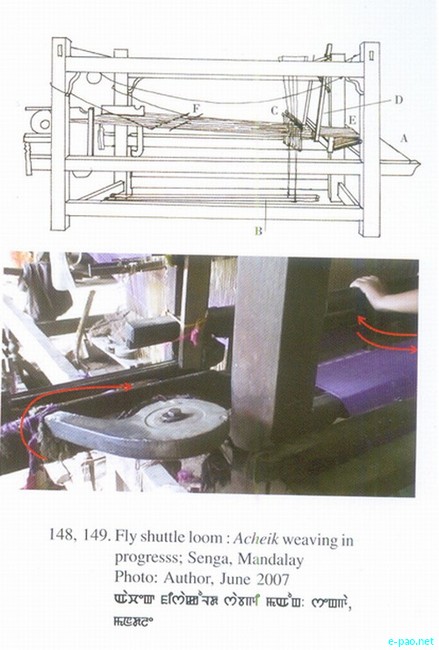


Myanmarese do business crossing the boarder of Manipur. They like the high quality of raw silk of Manipur. Silk-worms were found in plenty in the Kabo valley. Manipur was found growing plenty of silk plants all over the state according to a report of East India Company in 1882. Silk worms where available in its natural condition. Silk textile production started in the second century in Manipur. As such, Myanmarese Manipuri women are skilled in the production of silk textile.

During the reign of king Mindon of Myanmar (1852-1878), achiek was produced by using light shuttles numbering 120. Then there was the trend of increasing the boat-shaped shuttles upto 300 (lun thone-ya) numbers from 200 (lun hanaya) in weaving achiek. Achiek or lun taya. lun-hanaya or lun thone-ya arc silk cloths of high quality.

The designs found in achiek inspire others to use them in other areas. Weavers in the central part of Gangaw and the western part of Arakan started to produce cloths by imitating the pattern of achiek. Weavers of Inle lake and Chithei weavers near Prome and Thabyei Auk of Mandalay can be cited as examples. Lun taya and achiek have continued as the national cloths of Myanmar.

Use of achiek

Achiek longyi or sarong was used by the royalty from early times. Its use by common people was forbidden. Some achiek had been banned for use by them. The green and red coloured achiek were reserved for the king's use only. There is a tradition of using pink- coloured achiek only by the women of the royal family. The other nobles and the rich were allowed using other achieks other than the ones mentioned above.

However, the quality of these achieks must be of an inferior kind. Achiek to be used by the Shan royalty was brought from Amarapura. Classical dancers and married women wear achiek sarong. Different communities of Myanmar from western Rakhein to southern Mon use achiek. Even the middle part of Myanmar also use achiek.
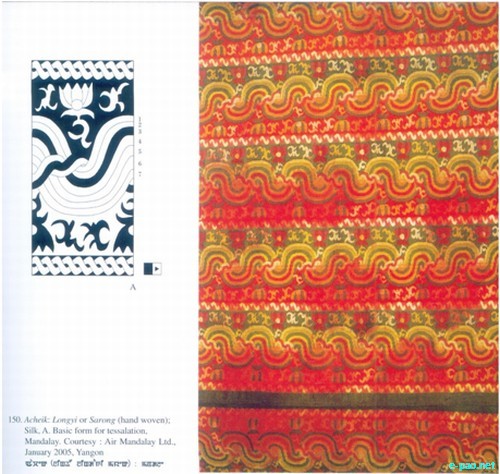


Origin of achiek The meaning of achiek is to connect one another. Some believe that achiek's patterns are found out of zig-zags or ornamental loops. On the other hand there is no vertical design; besides being not embroidered, it can be considered as one based on floral pattern. The design of achiek can be termed as a small rainbow since it has five to eleven layers. Kate women weavers of Amarapura
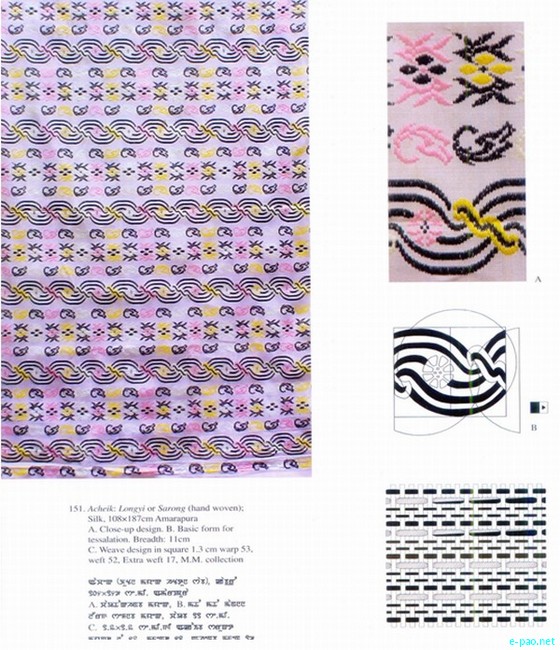
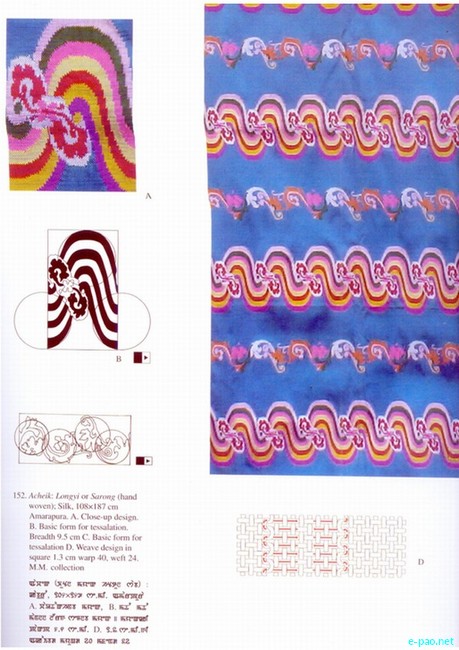
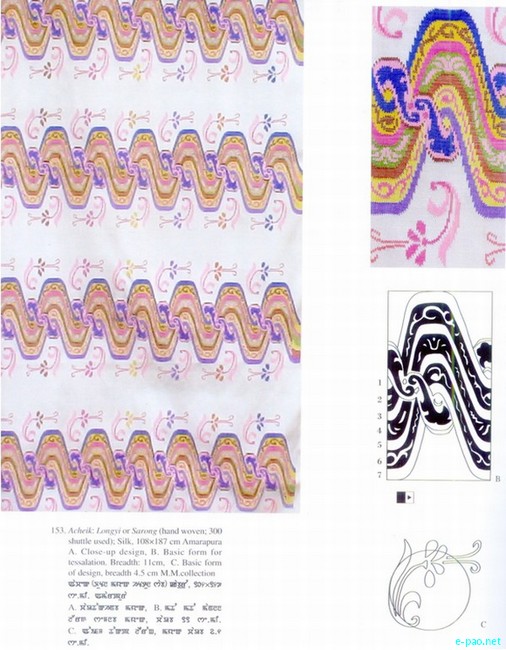
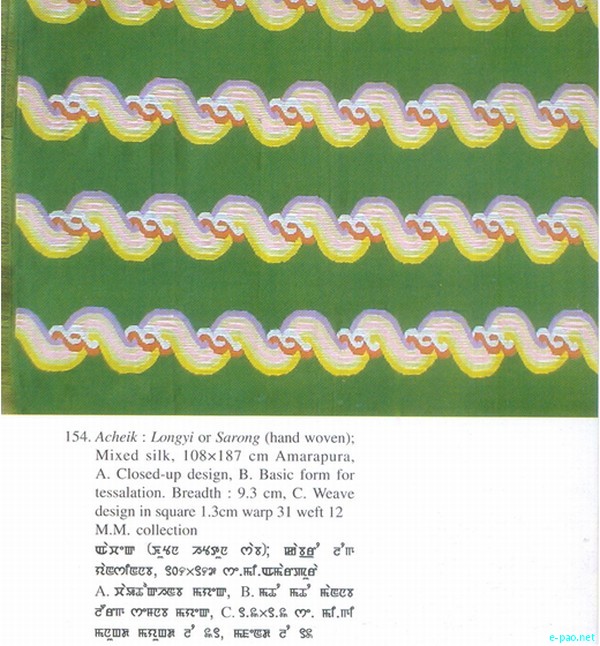
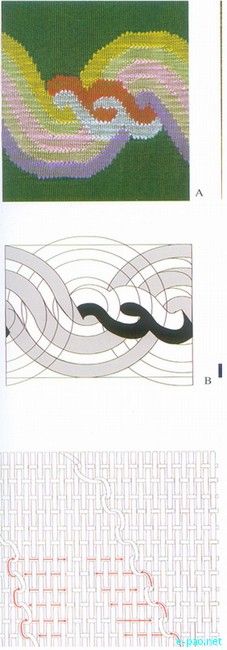


called achiek as thouri-mayek (hind-pin-kyo in Myanmarese). achiek was inspired by the sight of flowers nestled on water waves.


See a gallery photo of Manipur and Myanmar here.

To be continued ....


Mutua Bahadur


* Mutua Bahadur contributes to e-pao.net regularly. This article was webcasted on April 28, 2011.


* Comments posted by users in this discussion thread and other parts of this site are opinions of the individuals posting them (whose user ID is displayed alongside) and not the views of e-pao.net. We strongly recommend that users exercise responsibility, sensitivity and caution over language while writing your opinions which will be seen and read by other users. Please read a complete Guideline on using comments on this website.


LATEST IN E-PAO.NET
  • World Environment @Lamdeng #2 : Gallery
  • Violence in Manipur 2023-2026 : Timeline
  • Why Kuki failed to co-exist with communities
  • Apatani Fashion Week 2026 at Hija
  • Admission Notice : Dhanamanjuri University
  • 41 yrs of healing lives & strengthening Manipur
  • Smart protected cultivation : For climate smart
  • Heatwave makeup guide
  • Call for conscientious voting
  • Ningol Phida @Shumang Leela #1 : Gallery
  • Two civil society reports on violence in Manipur
  • Influenza : A potential for another pandemic ?
  • Who Shapes Whom ? :: Poem
  • Rejects KZC's June 25 Press Conference
  • Science behind the RSS Shakha
  • Paradox of devotion, power of babas & justice
  • Impact of inter-district blockade
  • Naga Peace Process: Indo-Naga Talk: Timeline
  • Day 3 : Yaoshang Sports : Gallery
  • World Motor Cycle Day @Andro : Gallery
  • SoO & selective law application
  • New thaw of Indo-Myanmar relationship ?
  • Transparency in rehabilitation centre evaluation
  • Mother Earth :: Poem
  • Patriarchal resistance in Africa- gender equality
  • After Sharda who, is the question
  • Sillam Sintha Jagoi @ATINGA : Gallery
  • Featured Front Page Photo 2026 #3: Gallery
  • Constitutional and federal discourses
  • Guru Shishya Parampara Scheme 2026-2027
  • The Personal MBA is no less than an MBA
  • A surge of love :: Poem
  • Walking Lens - 3rd Edition
  • Selling false sense of normalcy
  • Ethnic conflicts & effects on local fisheries
  • July Calendar for Year 2026 : Tools
  • Seminar: NE Traditional Knowledge System
  • Youth, Education & the Road to Peace
  • I Will Not Be a Footnote :: Poem
  • Rejects KZC's Contradictory Statements
  • Being Indian/Manipuri citizens
  • The politics of shutdown & blockade
  • 360° panoramic view of spots in Manipur
  • Tangkhul Meiphung: The wounds of Time
  • Arambai Tenggol & the law of defence
  • SWC Khongman Mourns Demise of Founder
  • A New Skyline for Imphal
  • Legal for Inmates of Manipur Central Jail
  • Demands Abrogation of SoO
  • How Football Connects Us Across Generations
  • Homecoming @ Washington DC : Gallery
  • BSc (Horticulture) State Govt Nominee
  • The World Drug Problem
  • Senior Media Delegation Visits Karkinos
  • Why is interest on education high ?
  • Guwahati Airport Emergency Response
  • Admission without a shred of guilt
  • ANSAM Rally demanding justice : Gallery
  • Imokanta's Shumang Lila of Manipur : Review
  • Drug addiction is a disease that can be beaten
  • KZC's 25 June PR Exposes Brutality
  • Awareness Programme on Drug Abuse
  • Three-day Rise Up Summer Camp 2026
  • Tips for healthy & beautiful nails in summer
  • The yarn about return of peace
  • Workshop- 'AI in Journalism' : Gallery
  • Yaruingam, Ruichumhao, Babysana : Eming
  • Exploring The Vanishing Self - Book Launch
  • The Great Regression of Manipuri Cinema
  • A venture on culinary enterpreneurs
  • A convoy that deepened fears of proxy war
  • Offering :: Poem
  • Forgotten dialogues convened at Delhi
  • 25th The Great June Uprising #2 : Gallery
  • Day 2 : Yaoshang Mei Loukhatpa : Gallery
  • How Manipuri Cinema is Reimagining Future
  • A Dime A Dozen # 1 : Author's Warning Note
  • 3 yrs on, Manipur demand an honest reckoning
  • Financial traps you should avoid
  • NE India Infrastructure Summit 2026
  • Stand to contest coming Assembly polls
  • Manipuris (Meitei) and Bishnupriyas
  • Kamesh Salam Recognized by Business Today
  • Manipur's children are watching
  • Nungshiba Leinamna : Weaves Love & Legacy
  • The albatross of mid-June :: Poem
  • On Working Committee, NNPG's statement
  • Workshop : Application of AI in Journalism
  • Emergency shutdown politics of CoTU
  • 26th Death Anniv : Arambam Somorendra
  • Yaoshang Pechakari @ Govindaji: Gallery
  • Understanding infertility in a changing world
  • The Cry of My Six Brothers :: Poem
  • International Day of Yoga @ MU
  • International Day of Yoga @ IBSD
  • RSS is already registered
  • People returning again on wooden cots
  • ANSAM rally at Imphal : Call of indigenes
  • Candle Light Vigil @ New Checkon : Gallery
  • Youth & Politics: When Are We Addressing
  • Hostage crisis
  • B.Sc @ CMC College of Nursing, Koirengei
  • Seasons of a Lie :: Poem
  • Textile Designers @ Directorate of Handloom
  • Footpath parking at Zudio, Thangal Bazar
  • Cultural @ Beating of Retreat #2 : Gallery
  • Tree Plantation Drive @ Mekola : Gallery
  • Girls' Hostel at Heikakpokpi, Tengnoupal
  • Burden of NCD among women in Manipur
  • 35th State Thang-ta Championship 2026
  • Congratulatory Message : PhD Degree @ MU
  • Life as it floats down :: Poem
  • Advanced Botulinum Toxin Therapy
  • A three way conflict situation
  • 25th The Great June Uprising #1 : Gallery
  • The Foundational Question & Its Evasions
  • The necessity of peace in Manipur
  • AMD Academic Accelerator Program, Pune
  • Question KIM-CM Meet amid Kuki Crimes
  • Public Welfare Camp kicks off in Senapati
  • Yoga for beauty
  • Time for Imphal to assert its position
  • Manipuri and Bishnupriya Manipuri
  • June 18 : A Day of Unity, Sacrifice
  • A region on edge for 3 years on the trot
  • Cry Mother Cry :: Poem
  • Movement of half the population is in trouble
  • Building future or destroying generation ?
  • NEET Examination, 2026 : Noney District
  • June of 2001 and the reality of today
  • Protest erupted @RIMS [15 Jun] : Gallery
  • Massacres perpetrated by Kukis during British
  • Political neglect of PhD graduates
  • The fate of Ophelia :: Poem
  • RACTION 2026 - Residency & Film Challenge
  • Monetary worth of a homemaker unpaid work
  • Guwahati Airport Among World Beautiful
  • In a state of conflict for over 3 years
  • Khuiyoi Tompok & Sound of the Drum
  • 28th Meira Paibee Numit @Khurai : Gallery
  • BMSA Annual Multi-Sports Tournament 2026
  • The Real Subject of Priyakanta's 'I Am Special'
  • Dharma Era :: Poem
  • Beyond the gut health of poultry
  • Summer Workshop for film enthusiasts
  • Why not to Dimapur or Guwahati ?
  • 3rd anniv- Khamenlok 'massacre' : Gallery
  • Manipur and settler colonialism
  • Beyond the Failure of Regional Parties
  • Healthcare for Manipuris in Bangalore
  • 'Ningol Van' Tree Plantation at Mekola
  • A battle :: Poem
  • The Cockroaches are Knocking
  • Reflecting on the reality here
  • AI : Explore 25+ yrs of Manipur archives
  • Why reform never comes : Political economy
  • When Hope Dies, A Match Remains :: Poem
  • Sharda as Union Minister : A thought
  • World Blood Donation Day 2026
  • Entrance Exam for B.Sc. Nursing
  • Assam emerges as next concert economy hub
  • Solo Dance: Wahengbam Debina #1: Gallery
  • Why the crisis demands a National strategy
  • The role of exercise in diabetes
  • Condemns Politicisation of Killing
  • Workshop on Employment & Entrepreneurship
  • Bootcamp on "RTL Design, IP Integration"
  • 5th June is the World Environment Day 2026
  • Draft List of Polling Stations in Senapati
  • Looking back at the last 30 days
  • Remains of 6 Naga hostages @JNIMS: Gallery
  • Remembering Prof Khundrakpam Jugindro
  • Role of R&D / IPR in Economic Development
  • Workshop: Building Future-ready Youth
  • Nostalgia :: Poem
  • Condemnation of Continuing Violence
  • Outrage over tragic killing of 6 innocent Nagas
  • Hands of Delhi since May 4, 2023
  • The Lost Paradise
  • Art Exhibition by G Krishnadas: Gallery
  • Posts @ Horticulture Dept, Manipur
  • Assistance to Victims of 13 May Attack
  • Moirangthem Chandra's collection of Puyas
  • How Insurgent Taxation Shapes Everyday Life
  • What Manipur conflict reveal about oppression
  • 'No NRC Update No Census' Rally : Gallery
  • Price of a vote: How debt drives election
  • Seminar on "Media for Communal Harmony"
  • Yaoshang Mei Loukhatpa #3 : Gallery
  • Showcasing Manipur @Switzerland : Gallery
  • Criticism Without an Alternative is Not Enough
  • Arambam Somorendra: A Visionary
  • The Lament of a Silent Tree
  • Behavior, Psychology & Society
  • 1st Peaceful Coexistence Award 2026
  • Snakebite: A Public Health Emergency
  • Events- Kuki militant & Naga village volunteer
  • World Environment @Lamdeng #1 : Gallery
  • India Isn't Becoming a Superpower
  • Ahingee Laan : Dance-drama #2 : Gallery
  • Tree Plantation @Taobungkhok : Gallery
  • Abdul Hafiz graveyard at Imphal War Cemetery
  • Homecoming : Exhibition at Washington DC
  • Coming together of the indigenes
  • Martyrs' Day @ Cheiraoching #3 : Gallery
  • Showcasing product from IDPs at Switzerland
  • The abduction & 'murder' of 6 Naga civilians
  • Why keep returning to Regional Politics ?
  • The King Who Came from the Sky: Pakhangpa
  • Chakan Gang-Ngai 2026 : Ooba Video
  • Unfinished requiem- Linthoingambi & Hemanjit
  • How to Break Manipur w/o Breaking Any Laws
  • 17th Manipur State Film Awards (MSFA), 2025
  • Eid-Ul-Zuha @Sangaiyumpham : Gallery
  • 16th Manipur State Film Awards (MSFA), 2024
  • Lhangpat Mei @Keishamthong #2: Gallery
  • Incursion from across the border
  • Radio E-pao: 5 new songs updated
  • Cheirao-chingkaba on Cheiraoba #2: Gallery
  • Anoi Group Art Exhibition 2026 : Download
  • Rally at New Checkon- May 25 : Gallery
  • 63rd Mr. Manipur #3 : Gallery
  • Yaoshang - Cooking Competition : Gallery
  • Manipur State Award for Literature 2024
  • Manipur in India Constitutional Transition #3
  • Lamjen @ Thangjing Haraoba #1: Gallery
  • HSLC Exam 2026 : Full Result
  • HSLC Exam 2026 : Pass % : Govt Schools
  • HSLC Exam 2026 : Pass % : Aided Schools
  • HSLC Exam 2026 : Pass % : Private Schools
  • HSLC Exam 2026 : Withheld-students
  • HSLC Exam 2026 : Compartmental candidates
  • HSLC Exam 2026 : Statistical Abstract
  • HSLC Exam 2026 : Important Information
  • Indigenous Leaders Call for Global Recognition
  • Tronglaobi: 2 children laid to rest : Gallery
  • Free Online access to 'Asangba Nongjabi
  • Candlelight vigil: Killing at TM Kasom : Gallery
  • Fractured sovereignty : Proxy war
  • Final Merit List : Manipur Civil Services 2022
  • HSE : Pushpa K, H Keniya, P Taibangnganba
  • Yohen Longjam : HSE 2026 : Science Topper
  • Sarangthem Ayingbi : HSE 2026 : Arts Topper
  • Thoihenba Thongam : HSE 2026: Commerce
  • Most Heinous Murder: Derailing Normalisation
  • Killing of 2 children @ Tronglaobi : Gallery
  • Boong: India's 1st BAFTA in children's cinema
  • PUCL Tribunal report: A shadow of partiality #3
  • PUCL Tribunal report: A shadow of partiality #2
  • PUCL Tribunal report: A shadow of partiality #1