


Water is the elixir of life
- World Water Day is celebrated on 22nd March every year -
Dr N Munal Meitei *
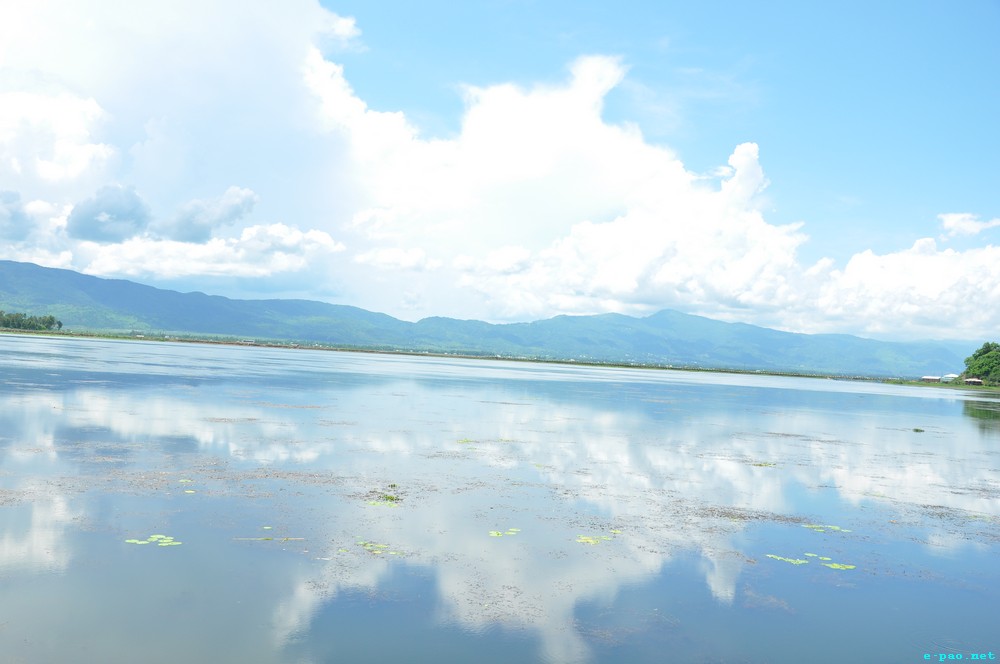
Loktak Lake - Largest Fresh Water Lake in North East India in June 2013 :: Pix - Deepak Oinam
“Water is the ink that writes the poetry of life”
Water is life and constant on Earth called “life liquid” or “the elixir of life.” Water scarcity leads to every global problem right from food shortages, economies, international peace and even civil unrest.
Globally, nearly two-thirds of the world’s population, experience severe water scarcity for at least one month each year. By 2050, 5 billion people are expected to live with extremely high-water stress as the water demand will increase by 55% due to increase in population, manufacturing, thermal electricity and domestic use.
World Water Day is celebrated on 22nd March every year since 1993. The theme for 2026 is “Water and Gender,” with the slogan “Where water flows, equality grows”.
This theme emphasizes centering women and girls in water solutions, as they are disproportionately affected by the water crisis and are critical to sustainable water management and decision-making. As global inequality worsens, more people will be unable to afford clean drinking water and now, we need for an international define water right to prevent conflicts and water war.
All organisms contain water and depend for survival. Water is nature’s most precious gifts. Water is central to grow crops and raise livestock, producing electricity, maintaining human health, fostering equitable societies and meeting the world’s climate goals. Without better water management, population growth, economic development and climate variation are poised to worsen water stress.
Having free access to freshwater is the basic human right, of all and sanitation and hygiene are dignity. Water has the power to unlock human resources. But the problem faced is its scarcity due to injudicious use is immense.
Without intervention, such as investment in water infrastructure and better water governance-water stress will continue to get worse, particularly in places with rapidly growing populations and economies. Living with water stress jeopardizes people’s lives, jobs, food and energy security.
Water covers 71% of the Earth’s surface. 96.5% of the planet’s water is saline and 3.5% are fresh water. Out of it, 1.7% is in groundwater, 1.7% in glaciers and ice caps. Only 0.1% of the Earth’s water is available with us. Out of this palatable, maximum is again in the lakes and rivers. Hence only a little fraction of water is available for us.
Increasing water stress threatens countries’ economic growth and food security. Due to climate variation, world’s irrigated agriculture faces extreme high-water stress up to 84%, with a loss of water supplies in about 60% of those croplands -particularly rice, sugarcane, wheat and maize.
Yet to feed a projected 10 billion people by 2050, the world will need to produce 56% more food calories than it did in 2010 -all while dealing with increasing water stress as well as climate -driven disasters like droughts and floods.
The human body contains about 70% water. To keep us healthy, we need about 3% of our body weight equivalent to 3 litres of water daily. Water is necessary for the digestion and absorption of food; helps maintain proper muscle tone; supplies oxygen and nutrients to the cells; rids the body of wastes; and serves as a natural air conditioning system.
Climate variation is expected to severely alter the quantity, quality and spatial distribution of global water resources. Warmer temperatures increase evaporation, change the moisture holding capacity in the air and alter rainfall patterns. Water bodies, rivers and wetlands are among the world’s most productive ecosystems. In short, water is lifeblood for our planet.
Water is now an acute crisis in our country. The fact that India represents 21% of global population, but possesses only 4% of the world’s freshwater putting India in the 13 th most water-stressed country.
In the country, water shortages can lead to industrial interruptions, energy outages and agricultural production losses - like those already being seen, where a lack of water to cool thermal power-plants between 2017 and 2021 resulted in 8.2 terawatt-hours in lost energy - or enough electricity to power 1.5 million Indian households for five years.
India will have a water deficit of 52% by 2030 with nearly 42% of population will face very extreme water stress as per a report from Asian Development Bank. Increasing in population and reducing in rainfall and other water resources are the main cause for the crisis. Failing to implement better water management policies could result in GDP losses in the country from 7% to 12% by 2050 according to the Global Commission on Adaptation.
In Manipur, we are facing, with acute water scarcity more severely in hill districts like Ukhrul. To save the state’s water crisis, we need to conserve and protect our forests, springsheds, catchments and wetlands.
Our state does not have a long-term water plan like big dams and other water storage facilities for any eventualities. Unluckily, all of our Rivers are rain fed, without a snow fed River in the state and hence in events of scanty rainfall, we will face the severe calamity. Many villages in the in the hills are likely to swift down to valley due to water crisis in the next few years.
Most of our water sources have been dried up due to lack of vegetation in the upper reaches. Therefore, felling of trees in the catchments should immediately be stopped. As an impact of climate variation, the state is facing with scanty rainfall.
Now we need to spread awareness on water conservation techniques. Every new house should compulsorily have the rain water harvesting facilities. The authority should enhance to install for more water treatment facilities from all sources. Promoting ideas for making the best use of existing water supplies should also be the core initiative.
The State needs to have a sewage water treatment plant which may save around 200 million litres water annually from unnecessary waste. Without the source, just implementing JalJeevan Missionwill not solve the water problem.
As per the theme, this day is not just about celebrating water; it’s about recognizing the critical role of women in managing water resources and ensuring that gender equality is part of the global conversation on water and sanitation. By involving women and girls in decision-making, we can build a sustainable future for water management, ultimately improving lives for all and future water crisis.
* Dr N Munal Meitei wrote this article for The Sangai Express
The writer is an environmentalist and working as DFO/Chandel,
and can be contacted at nmunall(AT)yahoo(DOT)in
This article was webcasted on March 28 2026 .
* Comments posted by users in this discussion thread and other parts of this site are opinions of the individuals posting them (whose user ID is displayed alongside) and not the views of e-pao.net. We strongly recommend that users exercise responsibility, sensitivity and caution over language while writing your opinions which will be seen and read by other users. Please read a complete Guideline on using comments on this website.


