


RTE Act 2009 Versus unaided minority schools
Keisam Pradipkumar *
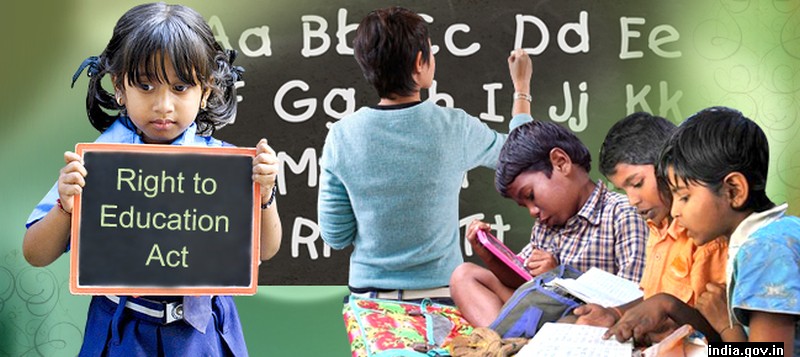
Prior to the introduction of Article 21-A to the Constitution of India by the 86th amendment in 2002, the right to education was implicit in Article 21 read with Article 45 which is a Directive Principles of State Policy. Unamended Article 45 reads as " Article 45: Provision for free and compulsory education for children- The State shall endeavour to provide, within a period of ten years from the commencement of this Constitution, for free and compulsory education for all children until they complete the age of fourteen years." By the introduction of Article 21-A, it become a fundamental right and the same reads as "21-A: The State shall provide free and compulsory education to all children of the age of six to fourteen years in such manner as the State may, by law, determine." The manner to determine and regulate for providing free and compulsory education is laid down in the newly enacted "The Right of Children to Free and Compulsory Education Act, 2009 [in short, RTE Act, 2009]".
The object of RTE Act is to provide for free and compulsory education to all children of the age of six to fourteen years. The Act, inter-alia, mandates the right of the children from 6-14 years to free and compulsory education and responsibility and function of the State and school. Section 2(n) defines "school" means any recognized school imparting elementary education and includes-
(i) a school established, owned or controlled by the appropriate Government or a local authority;
(ii) an aided school receiving aid or grants to meet whole or part of its expenses from the appropriate Government or the local authority;
(iii) a school belonging to specified category; and
(iv) an unaided school not receiving any kind of aid or grants to meet its expenses from the appropriate Government or the local authority.
Section 2(p) explains "specified category" in relation to a school, means a school known as Kendriya Vidyalaya, Navodaya Vidyalaya, Sainik School or any other school having a distinct character which may be specified, by notification, by the appropriate Government. Section 2(f) defines "elementary education" means the education from first class to eight class and as per Section 2(c), "child" means a male or female of the age of six to fourteen years. Section 2(b) defines "capitation fee" means any kind of donation or contribution or payment other than the fee notified by the school and Section 2(o) explains "screening procedure" means the method of selection for admission of a child, in preference over another, other than a random method.
Section 3 entitles every child from 6 to 14 years a right to free and compulsory education in neighbourhood school till completion of elementary school. Chapter III [Sections 6-11] mandates the appropriate Government to establish schools for providing free and compulsory education to every child.
Chapter IV [Sections 12-28] prescribes the responsibilities of schools and teachers. Section 12(1)(c) mandates that a specified category school and an unaided school shall also admit in class I, to the extent of 25% of the strength of that class, children belonging to weaker section and disadvantaged group in neighbourhood and provide free and compulsory elementary education till its completion. Section 13 specifically bans collection of capitation fee and conduct of any screening test to child or parent or guardian. Section 18 mandates recognition of school from appropriate authority and Section 19 prescribes the norms and standards for school as specified in the Schedule. Under Section 23, the minimum qualifications for appointment of teacher is as laid down by the academic authority. Section 29 authorizes the appropriate Government to prescribe the curriculum and the evaluation procedure for elementary education.
From a bare perusal of the various provisions of the RTE Act 2009, it is clear that the Act does not treat "a minority institution" as a separate and distinct category of school as Section 2(n) does not define a minority school as a separate category. Such school is included within sub clauses (ii) and (iv) of Section 2(n). Thus a minority school will fall within sub clause (ii) if it is an aided and within sub clause (iv) if the same is an unaided school. The unamended RTE Act does not exempt any school from its purview.
However, after the judgment of the Supreme Court of India in the case of Society for Unaided Private Schools of Rajasthan versus Union of India: (2012) 6 SCC 1 [dated 12-4-2012], for the first time, it is held in Para 65 that RTE Act is not applicable to unaided minority schools. Para 65 reads as "However, the said 2009 Act, and in particular Sections 12(1)(c) and 18(3) infringes the fundamental freedom guaranteed to unaided minority schools under Article 30(1) and consequently, applying the R.M.D. Chamarbaugwalla v. Union of India principle of severability, the said 2009 Act shall not apply to such schools."
From a plain reading of Para 65, it is clear that the non-applicability RTE Act to minority school is only the provisions of Section 12(1)(c) which mandates reservation of 25% seat for disadvantage and weaker section and Section 18(3) which authorizes the appropriate Government for withdrawal of recognition and not to the whole Act.
In order to understand the meaning of minority school, first of all we have to look for the meaning of "minority" within the Constitution and rights conferred on a minority school. The Constitution does not define as to what is a minority. However, the UN Sub-Commission on Prevention of Discrimination and Protection of Minorities has defined "minority" (by an inclusive definition), as-
(i) The term 'minority' includes only those non-document groups in a population which possess and wish to preserve stable ethnic, religious or linguistic traditions or characteristics markedly different from those of the rest of the population;
(ii) such minorities should properly include a number of persons sufficient by themselves to preserve such traditions or characteristics; and
(iii) such minorities must be loyal to the State of which they are nationals.
Article 27 of the International Covenant on Civil and Political Rights does not define the expression but gives the following rights to them- In those States in which ethnic, religious or linguistic minorities exist, persons belonging to minorities shall not be denied the right, in community with the other members of their groups, to enjoy their own culture, to profess and practise their own religious or to use their own language. In the TMA Pai Foundation vs. State of Karnataka: (2002) 8 SCC 481, a Constitution Bench of the Apex Court has held that the word 'minority' is not defined in the Constitution but it literally means 'a non-dominant' group. It is a relative term and is referred to, to represent the smaller of two numbers, sections or groups called 'majority'. In that case there may be political minority, religious minority, linguistic minority, etc.
The Indian Constitution also safeguards the right of the religious and linguistic minorities through Articles 29 and 30, which read as under.
Article 29: Protection of Interest of Minorities- (1) Any section of the citizens residing in the territory of India or any part thereof having a distinct language, script or culture of its own shall have the right to conserve the same. (2) No citizen shall be denied admission into any educational institution maintained by the State or receiving aid out of State funds on grounds only of religion, race, caste, language or any of them.
Article 30: Right of Minority to Establish and Administer Educational Institutions- (1) All minorities, whether based on religion or language, shall have the right to establish and administer educational institutions of their choice. (1A) In making any law providing for the compulsory acquisition of any property of an educational institution established and administered by a minority, referred to in clause (1), the State shall ensure that the amount fixed by or determined under such law for the acquisition of such property is such as would not restrict or abrogate the right guaranteed under that clause. (2) The State shall not, in granting aid to educational institutions, discriminate against any educational institution on the ground that it is under the management of a minority, whether based on religion or language.
Article 30 is confined to religious and linguistic minority and confers two rights- (i) right to establish an institution of their choice, and (ii) right to administer it without hindrance from outside. The right under Article 30(1) is subject to the regulatory power of the State and the same is not a charter for maladministration. Legislation for social welfare and similar regulatory measure do not constitute an infringement of Article 30(1). So long as the minority is not deprived of the actual management of the institution, a law regulating certain matters concerning industrial relation, academic matters and the like does not infringe Article 30(1) [See Virendra Nath vs. Delhi (1990) 2 SCC 307, Kerala Education Bill- AIR 1958 SC 956]. In Sidhrajbhai vs. State of Gujarat- AIR 1963 SC 540, it held that the regulation imposed should be reasonable, be regulative of educational character of the institution and must be conducive to making the institution an effective vehicle of education for the minority community or other persons who resort to it. It must not annihilate the institution.
In the Society for Unaided Private Schools of Rajasthan- (2012) 6 SCC 1 @ Para 56, 57 and 58, it is held as below:
"56. Article 29(1) confers on any section of the citizens a right to conserve its own language, script or culture by and through educational institutions and makes it obvious that a minority could conserve its language, script or culture and, therefore, the right to establish institutions of its choice is a necessary concomitant to the right to conserve its distinctive language, script or culture and that right is conferred on all minorities by Article 30(1). That right, however, is subject to the right conferred by Article 29(2).
57. Article 30(1) gives the minorities two rights: (a) to establish, and (b) to administer educational institutions of their choice. The real import of Article 29(2) and Article 30(1) is that they contemplate a minority institution with a sprinkle of outsiders admitted into it. By admitting a non-member into it the minority institution does not shed its character and cease to be a minority institution. The key to Article 30(1) lies in the words "of their choice".
58. The right established by Article 30(1) is a fundamental right declared in terms absolute unlike the freedoms guaranteed by Article 19 which is subject to reasonable restrictions. Article 30(1) is intended to be a real right for the protection of the minorities in the matter of setting up educational institutions of their choice.
However, regulations may lawfully be imposed either by legislative or executive action as a condition of receiving grant or recognition. However, such regulation must satisfy the test of reasonableness and that such regulation should make the educational institution an effective vehicle of education for the minority community or for the persons who resort to it. Applying the above test in Sidhrajbhai Sabbai v. State of Gujarat, this Court held the rule authorizing reservation of seats and the threat of withdrawal of recognition under the impugned rule to be violative of Article 30(1)."
In Para 60, it is held that by the 93rd Amendment of 2005 which incorporates Article 15(5), the ratio of P A Inamdar judgment- (2005) 6 SCC 537 to the effect of no reservation in private unaided college has been overruled. It may be pointed out that Article 15(5) empowers for reservation of seats for admission in both aided and unaided privates colleges for SC/ST/OBC.
Thus, it is quite evident from the 2012 judgment of the Apex Court that the right conferred to a religious and linguistic minority is for establishing an educational institution of its own choice and for its administration to preserve its own distinct identity. The words "sprinkle of outsiders admitted to it" in Para 57 makes it clear that the institution should be for the minority with some percentage of outsiders which again implying that the majority of the students should belong to the minority community. In last part of Para 68, it is categorically held that only those provisions relating to 25% reservation under Section 12(1)(c) and threat of withdrawal of recognition under Section 18(3) of RTE Act 2009 are violative of Article 30(1) and the whole Act is not ultra vires to Article 30.
It may be very pertinent to point out here that by the 2012 Amendment to RTE Act [effective from 20-6-2012 which is after the 2012 judgment], certain important changes have been incorporated and the most crucial ones are insertions of sub sections (4) and (5) to Section 1 and proviso to sub Section (2) to Section 21. These new provisions read as:
Section 1(1)
"(4) Subject to the provisions of articles 29 and 30 of the Constitution, the provisions of this Act shall apply to conferment of rights on children to free and compulsory education.
(5) Nothing contained in this Act shall apply to Madrasas, Vedic Pathsalas and educational institutions primarily imparting religious instruction.".
Section 21
(1)���.
(2)�����..
"Provided that the School Management Committee constituted under sub-section (1) in respect of,-
(a) a school established and administered by minority whether based on religion or language; and
(b) all other aided schools as defined in sub-section (ii) of clause (n) of section 2, shall perform advisory function only."
A combined reading of Sub Sections (4) and (5) implies that the RTE Act, 2009 is applicable to all schools as defined in Section 2(n) including both the aided and unaided minority schools subject to the provisions and freedom guaranteed by Articles 29 and 30 of the Constitution and only educational institutions imparting primarily imparting religious instruction are exempted from its purviews. This result is also fortified by the insertion of proviso to Section 21(2) which says that School Management Committee for minority managed school shall perform advisory functions only. This clearly indicates that RTE Act is equally applicable to minority schools, as long as it does not interfere with the administration of the management of such school. These new provisions introduced by the 2012 amendment overruled the 12 April, 2012 judgment of Apex Court to the effect that RTE Act 2009 is not applicable to unaided minority school.
It is very pertinent the working and nature of minority schools in Manipur specially those managed by the Catholic Educational Society. In view of the 2012 amendment, the argument of the Catholic Educational Society that RTE Act 2009 is not applicable to the schools managed by them. In these schools, majority of the students belongs to majority community and/or those who are not catholic. However, a very miniscule and insignificant section of the student might belong to the catholic religious minority group. This clearly shows that these schools are not established to preserve the very distinctive characteristic of catholic community; rather it is a commercial venture of the Catholic Educational Society of running schools meant for training students belonging to other communities. Thus, the schools run by Catholic educational Society in Manipur cannot camouflage their commercial ventures behind the protection of Articles 29 and 30 as their object is not for preservation of the distinct identities. Further, admitting students from class II is a ploy to escape and defeat the mandatory provisions of reserving 25% seats for disadvantaged and weaker sections. Such practice should be condemned and discouraged.
It is not in doubt that the academic and education part can be regulated by the State, if the same is fair, reasonable and does not interfere with the management of the minority school. Barring of receiving capitation fee and conducting screening test as stipulated by Section 13 of RTE Act is a fair procedure and the same does not infringes the rights provided under Articles 29 and 30. The pertinent question here is whether the proposed admission test and interview for admissions in elementary classes are so vital for preservation of the minority identity. Could the bar of Section 13 be treated as an assault to the distinctive features of Catholic community in Manipur? The answer is a big NO. The proposed test is devoid of any rhyme, reasons and with some ulterior motive for enhancing business interest.
It is very enlightened to acknowledge that the minority schools in Delhi specially those run by Catholic Society do not resort to admission test in violation of the mandatory provisions of RTE Act. Admission is done on the basis of lottery and even quota for weaker and poor sections is also earmarked without any pressure from the Government. This good practice in Delhi ought to be replicated in Manipur also.
In conclusion, it may not be off mark to say that the schools run by Catholic Educational Society in Manipur are not educational institutions run for the betterment of minority, but are commercial venture and hence they cannot claim the protection under Articles 29 and 30 of the Constitution of India. Even if assuming for the sake of argument that they are minority schools, they are well within the purview of RTE Act after insertions of Sections 1(4), 1(5) and proviso to Section 21(2).
* Keisam Pradipkumar wrote this article for The Sangai Express and Hueiyen Lanpao (English Edition)
The writer is Convenor, Manipur Alliance for Child Rights (MACR)
This article was posted on February 02, 2013.
* Comments posted by users in this discussion thread and other parts of this site are opinions of the individuals posting them (whose user ID is displayed alongside) and not the views of e-pao.net. We strongly recommend that users exercise responsibility, sensitivity and caution over language while writing your opinions which will be seen and read by other users. Please read a complete Guideline on using comments on this website.


