
TODAY -
✦
Iyek Ipee — letters Lonsum — final consonants Cheitap — vowel signs Khudam — marks
Full keyboard, E-pao keys and help ›

Khaichum as an Agro-Ecological System
Indigenous Knowledge and Integrated Farming in Ukhrul, Eastern Himalaya

M. Biswanath Sinha *
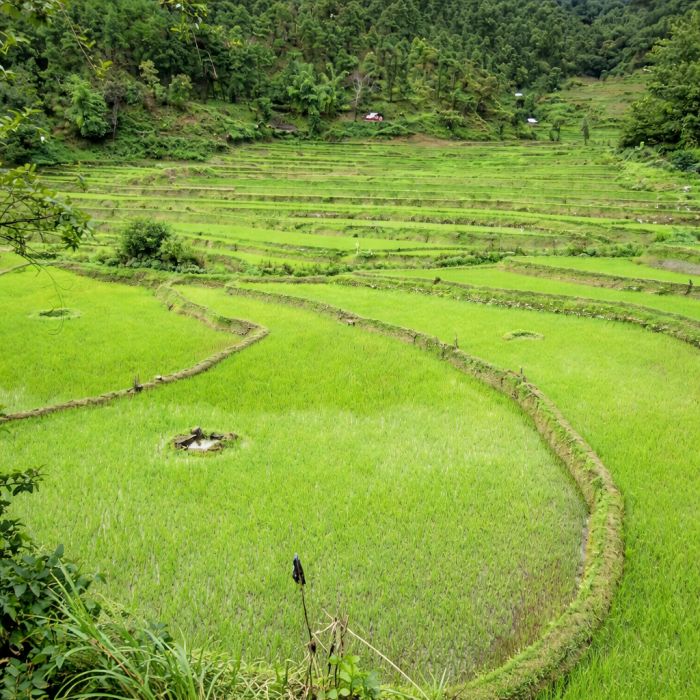
 Khaichum in the field
Khaichum in the field


Introduction

Integrated agriculture–fishery systems represent long-standing agro-ecological practices that combine crop cultivation with aquatic resource management within a shared landscape. Such systems are widely documented across Asia, Africa, and Latin America. While regional variations exist, they are unified by the principle of optimising land and water use through ecological integration.

These systems contribute to food and nutritional security by producing both plant and animal outputs. They reduce reliance on external inputs, as fish support pest regulation and nutrient cycling. They also sustain biodiversity and are particularly suited to smallholder contexts due to their low investment requirements.

Despite these advantages, such systems are declining due to the expansion of input-intensive agriculture, erratic rainfall, changing livelihood patterns, and market pressures. This decline threatens the erosion of locally embedded knowledge systems.

Within this context, the Khaichum system of Ukhrul district in Manipur offers a significant example of indigenous innovation. It demonstrates how local communities have developed adaptive and sustainable practices by closely engaging with their ecological environment.

Concept and Practice of Khaichum

Khaichum refers to the integration of fish-rearing ponds within paddy fields. The term, derived from the Tangkhul language (khai meaning fish and chum meaning enclosure), denotes a space where fish are retained and nurtured within agricultural fields.

The system involves the construction of small ponds within paddy plots. These ponds vary in size and shape and are distributed according to field conditions. They are not discrete units but integral components of the field ecosystem. Fish move freely between the ponds and the paddy field during the cropping season, with ponds functioning as refuge zones during fluctuations in water levels.

Locally available materials such as stones, logs, and straw are used to create shelter within the ponds. The system is based on experiential knowledge and does not depend on external technological inputs. Its design reflects a functional integration of land, water, and biological resources.
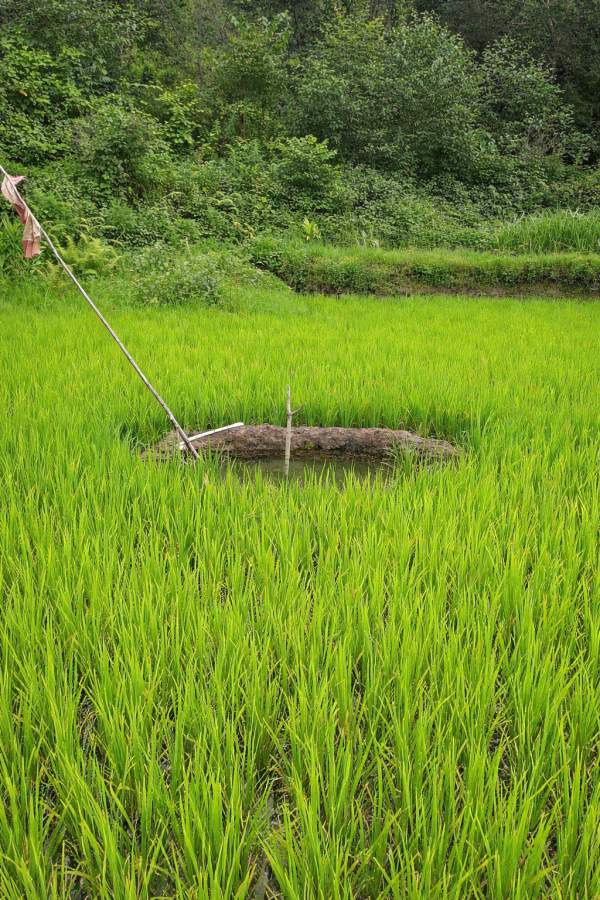
 Khaichum inside paddy field
Khaichum inside paddy field


Ecological and Historical Context

The evolution of Khaichum is closely linked to local ecological conditions and food practices. Fish constitutes an important component of the local diet, yet access to natural water bodies varies across the region. In areas where rivers are less accessible, seasonal flooding of paddy fields creates temporary aquatic habitats.

Local communities historically observed the migration of fish into flooded fields during the monsoon. By constructing ponds within these fields, they were able to retain and manage fish populations.

This adaptive response gradually developed into a structured system of integrated farming. The system has demonstrated flexibility over time. However, the fundamental ecological logic of the system has remained intact.

Seasonality and Production Cycle

Khaichum is closely aligned with the agricultural calendar. Fish stocking typically follows paddy transplantation during the monsoon months. At this stage, fields provide suitable aquatic conditions for fish growth.

Harvesting coincides with the maturation of the paddy crop. As water is gradually drained, fish move towards the ponds, facilitating collection. In some cases, farmers adopt staggered harvesting by retaining a portion of fish stock for later extraction. This approach supports both immediate consumption and future needs.

The system is not governed by rigid scheduling. Instead, it relies on continuous observation of environmental conditions such as rainfall, water levels, and crop growth.

Ecological Efficiency and Low-Input Characteristics

Khaichum exemplifies a low-input and ecologically balanced farming system. It does not rely on chemical fertilisers, pesticides, or artificial feed. Fish utilise naturally available food sources, including insects and organic matter.

The interaction between fish and paddy contributes to system efficiency. Fish movement enhances soil aeration, while their feeding behaviour reduces pest incidence. Basic water management practices, including the maintenance of field bunds and the use of simple barriers, ensure water retention and prevent fish escape.

Ponds serve as critical microhabitats that buffer environmental fluctuations. The use of local materials strengthens pond structure and reduces erosion. Overall, the system integrates seamlessly with existing farming practices and entails minimal additional labour.

Community Dimension and Knowledge Systems

Khaichum is embedded within community-based knowledge systems. Its transmission occurs through practice, observation, and intergenerational learning rather than formal instruction.

Collective action plays a significant role in sustaining the system. Women’s groups, in particular, have emerged as important institutional actors in recent years in keeping the tradition alive. Such involvements enable adaptation and innovation while reinforcing the social foundations of the practice.
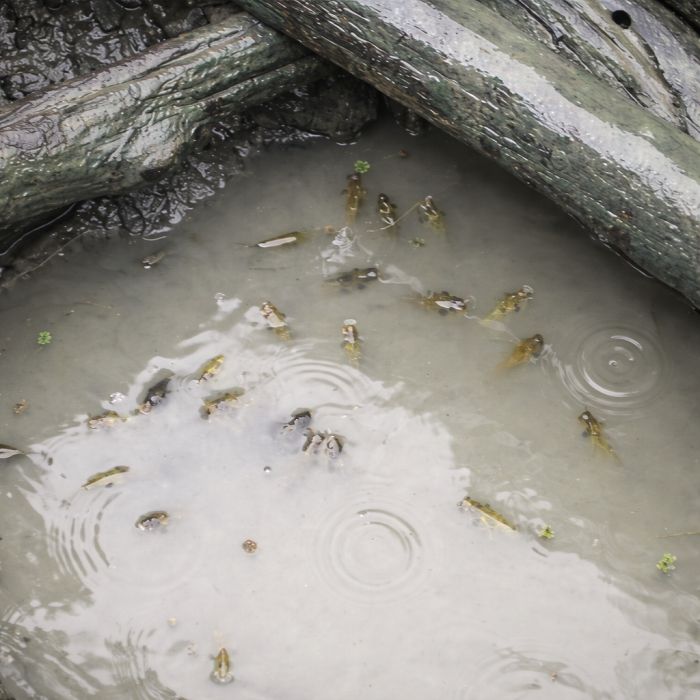
  Fish inside Khaichum
Fish inside Khaichum


Nutritional and Cultural Significance

The system contributes directly to household nutrition by providing an accessible source of protein. Fish harvested from Khaichum are consumed fresh or preserved for later use. Khaichum contributes directly to household food security. Fish harvested from the fields provide a regular source of protein. Families consume fresh fish during the season. Some also preserve fish by drying or fermenting it for later use.

The system supports both introduced and indigenous species. Local varieties such as Ngamu/khaiva, Ngakra, Ngakijou, Ukabi, and Ngacha are still found in these fields. These species are part of the local food culture. They are valued for their taste and nutritional benefits.

Fish is not only a food item. It is also part of social and cultural practices. It is shared during gatherings and used in traditional dishes. By maintaining Khaichum, communities also preserve these cultural links.

The diversity of species adds to resilience. If one species is affected by disease or environmental change, others may still survive. This diversity is an important feature of traditional systems. .

Constraints and Declining Trends

Khaichum is currently experiencing decline. Key factors include the spread of chemical-intensive agriculture, increasing preference for monocropping, and changing livelihood aspirations. Rural outmigration has reduced the labour available for traditional farming practices.

Market dynamics also influence adoption. Dependence on purchased inputs, such as fish fingerlings, can reduce economic returns. Furthermore, the lack of formal recognition and documentation limits the visibility and institutional support for the system.

Pathways for Revitalisation

Revitalising Khaichum requires aligning community knowledge with institutional and financial support. The system must remain rooted in local practices, strengthened through intergenerational learning, local-language documentation, and farmer exchange. Grassroots mobilisation, led by self-help groups and village institutions, is central to its continuity.

Targeted public support can enhance these efforts. Schemes such as Pradhan Mantri Matsya Sampada Yojana (PMMSY) can support fish seed supply and pond development. Livelihood programmes like Viksit Bharat - Guarantee for Rozgar and Ajeevika Mission (Gramin) and the State Rural Livelihood Mission can strengthen community institutions. Additional resources may be accessed through decentralised grants linked to the 16th Finance Commission.

Convergence across these mechanisms, combined with community-led action, is essential. External interventions should remain facilitative, enabling adaptation within local ecological contexts. This approach can support both sustainability and expansion to similar regions.
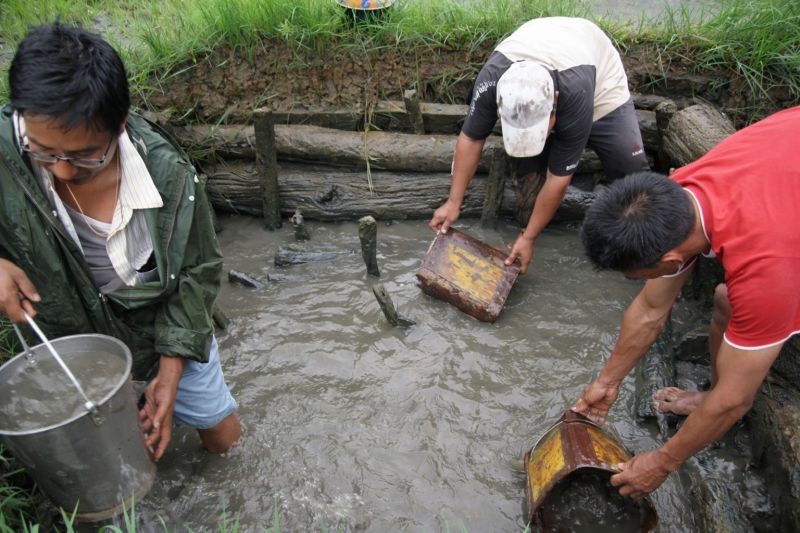
  farmers catching fish inside a Khaichum
Farmers catching fish inside a Khaichum


Conclusion

Khaichum represents more than a method of farming. It is a system shaped by observation, experience, and community life. It brings together land, water, crops, and fish in a balanced way. It supports food security, ecological health, and cultural continuity.

At a time when many traditional practices are fading, Khaichum offers important lessons. It shows how simple systems can be effective and sustainable. It highlights the role of community in maintaining and sharing knowledge.

Preserving such practices is not only about the past. It is also about the future. By valuing and supporting Khaichum, we recognise the importance of indigenous knowledge in building resilient and sustainable food systems.


(The author is Mumbai-based policy analyst with experience in social and corporate sectors. This article is written based on his field project in Ukhrul, Manipur. He acknowledges contributions from Ms Jayanti Keishing and Ms Rinlan Phungther for this article. Views expressed here are personal)


* M. Biswanath Sinha wrote this article which was sent to e-pao.net by Solidarity Manipur
who can be contacted at solidaritymanipur(AT)gmail(DOT)com
This article was webcasted on April 01 2026.


* Comments posted by users in this discussion thread and other parts of this site are opinions of the individuals posting them (whose user ID is displayed alongside) and not the views of e-pao.net. We strongly recommend that users exercise responsibility, sensitivity and caution over language while writing your opinions which will be seen and read by other users. Please read a complete Guideline on using comments on this website.


LATEST IN E-PAO.NET
  • Chali-Saba - Kang Ningol Palli #2: Gallery
  • Violence in Manipur 2023-2026 : Timeline
  • 2nd ISAC International Lyric Competition
  • Cave Within Me, Asoh , Red Panda
  • Enoong Ngallamdai Selected at KIFF 2026
  • Manipur Cherry Blossom Fest 2026 Concluded
  • When Imphal appears in a New York Court file
  • World AMR Awareness Week 2026
  • Time for voters to lay down agenda
  • Accounts of education of Maharaja Chandrakirti
  • 123rd birth anniv of Potsangbam Tomal Singh
  • Manipur Cherry Blossom Fest 2026 at Mao
  • Tripura�s Kokborok Film Khaani
  • Ngaijarakpa Kuireda- A Soaring Meitei Ballad
  • Rural Entrepreneurship in Manipur
  • Reading Books :: Poem
  • Unfolding human tragedy : Alcohol poisoning
  • Exploring The Vanishing Self #20
  • Ningol Chakouba @ UK : Gallery
  • Chiw Phran, Sikaisal, Mau- Assam Film
  • Understanding the Naga situation
  • One new moon night :: Poem
  • Reviewing the reviewers of Sonia's book
  • Assam LitArt Festival 2026
  • Untold story: Journalism in Ukhrul
  • The Shepherdess of the Glaciers- Ladakhi Doc
  • The Mask in the Hall :: Poem
  • A nostalgic look back at Catholic School
  • Condolence : Demise of Sapam Kunjakeswor
  • Community support defeating drug-resistant TB
  • Viksit Bharat Challenge Track @ MU
  • Emergence of new political parties
  • Ningol Chakouba- Mapam Lamdam #2: Gallery
  • Manipuri Film 'Interlude' at KIFF 2026
  • Sum of All Choices - Journey from Addiction
  • In Sikkim, a beekeeper prioritises bee health
  • Digi-SAPNE 3.0 Launched in Manipur
  • Friendship :: Poem
  • India's Dual-Track Dilemma: Myanmar junta
  • Shedding the baggage of the past
  • Ningol Chakouba @ Bangalore : Gallery
  • Ningol Chakouba uncelebrated
  • Nungole - Tripuri Tribute to Meitei Melodies
  • Aaini Onnai explores Bodo heritage
  • From Gamgiphai to Senapati : Innocent lives
  • Manipur Dairy wins IDF Innovation Award 2026
  • Laughing :: Poem
  • Time for the youngsters to emerge
  • Now you can search in Meitei Mayek ...
  • Ningol Chakouba 2026 at Guildford, UK
  • National Press Day 2026: Gallery
  • Last Cherry Blossom : Ka Jingshemphang
  • Manipur Crisis: Means to untie 'Tangled Web'
  • From Mind to Reality :: Poem
  • Environmental action no longer optional in AMR
  • In a state of conflict for over 3 years
  • 24 hrs general strike [Nov 16]: Gallery
  • 3rd Ningol Chakouba 2026 in Bengaluru
  • Mizo Film 'Rini Leh Rina' : Edge of Limbo
  • Delhi sleepwalks through Naga-Kuki conflict
  • Misrepresentation of Thadou War
  • Ningol Chakouba in UAE
  • Literary Excellence with Book Releases
  • Electoral Literacy Club launched
  • Killings, violence continue
  • Sinai Camp Debacle: Unmasking Rotten Core
  • Kashopapu brings Sumi folklore, wisdom
  • Nashon Pikna @ 31st Int'l Film Fest Kerala
  • Myanmar, Manipur & price of engagement
  • Legal Services Day, 2026 observed
  • Conference on 'Bridging Technoscience'
  • Condemns Ongoing Violence
  • Environment for education
  • Exploring The Vanishing Self #19
  • 228th Bheigyachandra @Nabadwip #4: Gallery
  • The Quiet Shelter of Her Smile :: Poem
  • Swedish filmmaker Mattias in Manipur
  • Competition: Are we striving together ?
  • Love in various guises :: Poem
  • Declining fertility rates & population policy
  • The King Who Bound Gods & Men: Story
  • Ningol Chakouba celebrated at Bangalore
  • The Way of the Mithun: Tribal Frames Manipur
  • Is Japan the answer for Nagaland youth
  • Wakhalgee - Powering Maniwood Global Pulse
  • Call for early action on diabetes
  • Leitlangpui Music Festival 2026
  • Time to disarm everyone
  • Ningol Chakouba @ Imphal : Gallery
  • Tribal Frames Manipur 2026 opens in Imphal
  • Indo Bangladesh Art Exhibition
  • Can MU lead a fish revolution ?
  • One Awakened Man :: Poem
  • Jiribam : Cleanest town in Manipur 2026
  • Surviving in relief centres
  • Ningol Chakouba- Mapam Lamdam #1: Gallery
  • Significance of Ningol Chakkouba Festival
  • Ningol Chakouba at Mumbai
  • Visit to Darul Uloom Banskandi - Barak Valley
  • Why Gen Z men experience early hair loss
  • Russia-India eco and biz ties
  • Ningol Chakkouba Fish Fair: Gallery
  • Nongsum killings put fragile truce to the test
  • 6th North East Fiesta 2026
  • Unfinished promise to our children
  • Tribal Futures 3.0 : Day 7 Report
  • Market for storytellers & business of faith
  • Of noise pollution and more
  • Ningol Chakkouba Shopping #1: Gallery
  • Sinalei, Lansinngam, Yaipuba : Eming
  • Catholic School Alumni Reunite in Celebration
  • Chenglou Henbi- Full-On Kangleiwood Dance
  • Science behind 2026 Nobel Prize in Physics
  • Suffering of people living in red & buffer zone
  • Open Letter of Appreciation & Solidarity
  • The answered questions
  • Rally - End proxy war in Manipur #2: Gallery
  • Myth Behind E W Dunn's 1881 Survey Data
  • Warmest greetings on Ningol Chakkouba
  • Ajay Bhalla's soft power
  • A maiden on the roadside :: Poem
  • Martin Garrix to perform in Shillong
  • Agrivoltaics can put the farmer at centre
  • Creating the right ambience
  • Exploring The Vanishing Self #18
  • Enoong Ngallamdai Film Scenes: Gallery
  • Pat Jasan movement: Lessons from Kachin
  • Democracy :: Poem
  • Bharat Ratna LK Advani Ji at 100 !
  • Abhigyanm Stages 2 Productions
  • Health & Rights Observatory exposes gaps
  • Scholarship Exam in B'desh (Manipuri areas)
  • We can begin again :: Poem
  • MoU to Strengthen Academic Cooperation
  • Awareness Program on role of MSCW
  • Food Safety Drive at Thoubal
  • What nature knows that humanity has forgotten
  • The Gati Shakti mindset : Thinking citizen-first
  • Ineffective Govt, unthinking people
  • Ibudhou Nongda Lairen Haraoba #2 : Gallery
  • Roadmap for peace: Abrogate SoO Agreement
  • Former Minister Mohd Alauddin passes away
  • 11th General Elections of NESOJ
  • Conference: Modern Day Sustainable Science
  • Aizawl International Half Marathon 2027
  • Skin detox tips to follow post-Diwali
  • Politics of peace pact
  • Declassified Files : Death of Hijam Irawa
  • Raas Leela @Tirupati Dasara : Gallery
  • Narengbam Maxson: National Cycling Record
  • Common things about Chikungunya & Dengue
  • How public can preserve crime scene evidence
  • Educational empowerment: 12 years of access
  • Cutting off Imphal-Ukhrul road
  • Naga Peace Process: Indo-Naga Talk: Timeline
  • Mera Chaorel Houba @ Kangla #2 : Gallery
  • Manipur: A Generation Growing Up in Unrest
  • Chemistry Nobel Prize - 2026
  • Tribal Futures 3.0 : Day 1 Report
  • For future generations :: Poem
  • District Level Peace Committees
  • Thakhaisida Manipuri Theatre
  • Run up to the Assembly elections
  • Tharoi Yonbigi Macha #1: Gallery
  • fulN AmsuH mnorama :: Seireng
  • Clarification on Liangmai position
  • An Appeal for Peace & Reconciliation
  • Targeting the State or the people ?
  • Condemns ongoing killings in Manipur
  • Harshit Dhingaun Meets Meghalaya CM
  • More or less a free for all in the hills
  • 228th Bheigyachandra @Nabadwip #3: Gallery
  • First Convocation of NIELIT held
  • Thingujam Diana: Sabre Int'l Referee Exam
  • Compassion or something else ? :: Poem
  • Ecology Day 2026 is for safety of organisms
  • 9 Dan and Laxmi Maa
  • Detection of Breast & Cervical Cancer
  • Rising call to abrogate SoO pact
  • Rally - End proxy war in Manipur #1: Gallery
  • Exploring The Vanishing Self #17
  • Indigenous Leaders Convene in New York
  • Contribution of Wetlands towards Agriculture
  • National Unity Day 2026
  • When the sirens stop :: Poem
  • ESTIC 2026: Connecting Science with Viksit
  • Hotel Cachar Club, erstwhile Silchar Polo Club
  • Manipur's Economic Divide: Refuse to Connect
  • A century of assertion & unfulfilled settlement
  • Supports Indigenous Rally
  • Why Manipur needs counselling in every school
  • World Stroke Day 2026
  • The heart and soul of the rally
  • Yenkhong Tamba : Mera Houchongba : Gallery
  • November Calendar for Year 2026 : Tools
  • Raas Leela @Mysore Dasara : Gallery
  • Delhi Fashion Week: Award at Needle Fest
  • Mecca Pact : A reality check
  • Pre-Diwali skincare: Prepping your skin
  • ODIIN Experiences: Nightclub of Year 2026
  • Two Deputy CMs at loggerheads
  • TRAU vs Navy: 135th Durand Cup: Gallery
  • 5 Manipuris : World Top 2% Scientists
  • Reinvent Northeast Season 9 at Russia
  • Towards a better healthcare
  • Keep on loving you :: Poem
  • Parliamentary co-operation for future
  • Cultivating friends at the right places
  • 48-hour shutdown: Sunurok Killing #2: Gallery
  • Featured Front Page Photo 2026 #5: Gallery
  • Justice for 6 Liangmai Nagas #3 : Gallery
  • The night is still young
  • Hell, thy name is Manipur
  • 7th Rongmei Freshers' Meet in Delhi
  • Workshop: Conservation of Manipuri Pony
  • 140/150 cadres missing at Sinai Camp
  • Pot Lannaba : Mera Houchongba #1: Gallery
  • The Last Picnic Season 2: Micro-Series
  • Manipur's expanding conflict & solutions
  • Mushroom Training Program at Khagempali
  • Delusional normalcy: Recurring violence
  • Toy Gun : Best Short Feature Film CNFF 2026
  • Call to exempt schools from bandhs
  • 228th Bheigyachandra @Nabadwip #2: Gallery
  • Significance of Mera Hou Chongba festival
  • When the kitchen turns loud
  • Nagaland First Five-Star Hotel
  • A harmonious family :: Poem
  • Ageing with HIV must not mean invisible
  • US Midterm Polls: What they mean for Manipur
  • Politics of the SoO pact
  • Exploring The Vanishing Self #16
  • The borders the Nagas never chose
  • Bend, Don't Break :: Poem
  • NE moved out of tropical climate zone
  • SoO-less Gong-sound for Peace
  • 'Soil Intelligence' is reshaping infrastructure
  • Noise protest: Manipur Violence : Gallery
  • 48-hour shutdown: Sunurok Killing #1: Gallery
  • Northeast Book Fair Imphal #2: Gallery
  • Langban Tha Katchaba @Haying #2 : Gallery
  • Catholic Valley Schools Sports #1: Gallery
  • Digital Revolution & MK Binodini Devi
  • Yaoshang Thabal Competition #5: Gallery
  • Yumjao Lairembi Haraoba #3: Gallery
  • Sushila & Bichu @Airport #2: Gallery
  • 'Meeyamgi Khollao Khongchat' #2 : Gallery
  • Mera Chaorel Houba @ Kangla #1 : Gallery
  • 61st Hunger Marchers' Day #3 : Gallery
  • Manipuri Calendar for year 2027 : Download
  • Meiteilon not Tibeto-Burman language: Rvw
  • 228th Bheigyachandra @Nabadwip #1: Gallery
  • Sushila & Bichu @Airport #1: Gallery
  • US-Manipur Digital Archiving Workshop
  • Heikru Hidongba @Bijoy Govinda : Gallery
  • XXXII National Thang-Ta C'ship concluded
  • 130th Irawat Anniversary : Gallery
  • Manipur Mesopotamia Force WWI : Gallery
  • Yaoshang Thabal @Khurai #2: Gallery
  • Naothingkhong & Pitanga #1: Hearthside Story
  • lEkoLdugi warisiH :: Seireng
  • Little Flower School, 1973 batch : Gallery
  • Study: Social Worker on Counselling Practice
  • Radio E-pao: 5 new songs updated
  • To our star Tamo Vicky, Vikram Chongtham
  • Langban Tha Katchaba @Haying #1 : Gallery
  • Colonial records: Hill Areas, 1891-1947
  • Census 2027 for Manipur deferred
  • Read Meitei Mayek news in romanized English
  • Relevance of NRC, 1951 for immigrants
  • Final Merit List : Manipur Civil Services 2022
  • PUCL Tribunal report: A shadow of partiality #3
  • PUCL Tribunal report: A shadow of partiality #2
  • PUCL Tribunal report: A shadow of partiality #1
  • Jump Start
    DBS Imphal SubSite | Readers Mail | Editorials | Education Announcements | Essay | Exclusive Event | Flash - Audio Visual | Incidents | LFS Imphal SubSite | News Timeline | Poetry | Opinion | Sports | Rock Concert | RSS | Top Stories | Wathi Jugai