TODAY -
✦

The influence of Korean TV dramas

Oliver Intoate Hmar *


Of all the TV dramas produced by Korea film-makers every year, the top-ten rated shows constantly include seven or eight play sequences. In 2006 alone, over 100 play-series were produced representing one of the world most creative outputs of this kind. What must be the causes behind the immense popularity of TV dramas among Asian viewers?

Certainly, the remarkable exaltation of drama programs in Korea has helped to crypt Korean TV dramas to all-new heights, in terms of quality and variety, which have also captured the attention of fast-growing audiences around the globe. As such, the Korean TV dramas which have been a corner-stone of the Korean wave phenomenon, have swept across Asia, and also have come to exert far-reaching influences on North East India's cultural and entertainment scene.

My niece who studied at Nirmalabus School, while writing her exam paper was asked by her teacher "What TV programs do you guys watch these days mostly?" The answers from the entire students was none other than ARIRANG TV.

Nevertheless, people who didn't get the chance of watching Cable network mostly talked about Manipuri's film and its actors like Kamala, Devita, Maya, Sadananda, Kaiku, Dinesh and the like. What step should our film makers take in order to spread out dramas and films as it's greatly influencing the life of the society and the youth in particular?

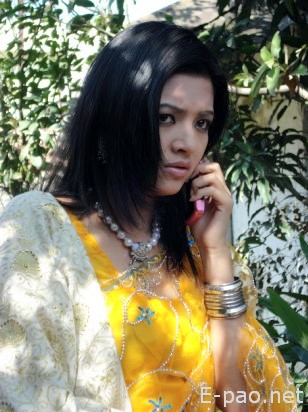
Kamala, popular Female Lead Actress in the Festival of Manipuri Cinema


Of the Korean films, Kang Myoung Seok (Cultural critic) said: "Ever since Korea's first TV drama was aired in 1962, Koreans have displayed an unwavering love for all manner of drama programs. As for the factors behind this fanatic popularity of TV dramas among viewers in Korea, much can be explained by the socio-historical characteristics of Korean society".

While "Love and Ambition" (Saranggwa Yamang), a very well-liked drama series broadcast by MBC-TV. The use of water would decrease nationwide, and there was no traffic on the streets. Even phone call at this hour was out of question. There was a speculation that this was because curfew was imposed and everyone must be at home after dark.

However, the fact is that people could not stand to miss a single episode of these episodes "Love and Ambition" This was one example which a hit drama program could influence the life of people. Nowadays, with the technology advancements and a diversified media environment, people can watch TV dramas wherever and whenever they want.

Cable networks are accessible to all district towns in Manipur as well. Film makers are to be well aware of the fact that the type of dramas or films they made is going to influence the society. Here I must say as an oriental, our films should also focus on our culture and tradition.

In Korea, TV dramas have long been dominated by melodramas with family-centered story lines, while history-theme series have also begun to gain growing popularity recently. Programs related to science fiction, suspense and mystery thrillers have been rarely produced.

However, this doesn't mean that the dramas only provide a mirror image of the Korean life style. The producers of Korean dramas strive to offer encouragement to viewers, many of whom prefer to have a brief break from a demanding day's work.

Consequently, Korean dramas will often feature fanciful plots of a rather ordinary person who encounters a life-changing experience. In large part, the basic formula for successful TV dramas in Korea calls for lead character, a kind of regular person that Korean viewers can commiserate with, and actors who wind up having an out-of-the-ordinary romance or whimsical experience, and in the end, lives happily ever after. Though there are a number of tragic ending dramas such as "Stairs to Heaven, Autumn in my Heart etc".

Because viewers can strongly identify and sympathise with these ordinary characters, the Korean dramas seem to invariably end with the triumph of good over evil. Although these dramas might be criticised for their tendency to moralies and oversimplify, they have enjoyed wide appeal across all ages and classes in Korea, and more recently have captured the fancy of viewers all over Asia.

For viewers in Asia, who share Confucian principles and place a strong emphasis on family values and true love, they can readily embrace the common themes of Korean dramas, such as rewarding the virtuous and punishing the wrongdoers.

The Korean dramas have gained popularity among Asian viewers by weaving scenes about traditional Korean cuisine into its main good-versus-evil plot line, and without passing judgment on cultural differences. In this way, Korean TV dramas have enjoyed a unique and universal appeal, which heretofore was hardly imaginable.

Nevertheless, Korean dramas are now venturing into new territory, while moving away from real-life experiences of the ordinary world to fantasy adventures that unfold in mythical or supernatural realms. Korean dramas can broadly be categorised into melodrama and historical drama. Due to the mixed results of various suspense-thrillers, crime-story, and comedy programs, the dominance of the melodrama and historical drama nevertheless appear destined to continue for some time in Korea.

Korean TV dramas have rapidly gained noteworthy popularity among viewers in several countries around the world. Over the past few years, the Korean dramas have been at the forefront to the Korean Wave pop culture phenomenon, along with becoming one of the most far-reaching cultural influences of the Asian region.

Through the establishment of the close relations with the film, showbiz, tourism, and publishing industries, Korean dramas have in fact moved well beyond the realm of TV. How can you explain the ability of Korean TV dramas to appeal to viewers in countries with a historical background, political environment, and traditional values which are so different from that of Korea?

For this, it would be helpful to reflect upon the insights of local specialists from Chile, Japan, China, and Vietnam, who have been tracking viewer reactions to the broadcast of Korean drama series.

There are many dramas that realistically depict love and personal relationship, but not many that deal with romantic love, as in the Korean melodramas. The most distinctive of Korean dramas is their visually striking depiction of romantic love, while the fashion and accessory items featured on screen add to the aesthetic enjoyment.

One of the main reasons that the dramas have been received so passionately by viewers across the universe is that the dramas need not be preoccupied with worldly interests or real-life problems, and therefore viewers can easily become emotionally attached to fanciful experiences.

Family relations is another time-honored theme to which viewers of all age groups can relate. In fact, other countries also produce its own family-centered dramas, of which many are excellent but they do not hesitate to reveal negative aspects of the family and society.

In contrast, Korean dramas tend to project a society that is caring and benevolent. The Korean "Men of the Bath House" deals with the mundane life of ordinary people, while at the same time attaining a high level of artistic refinement.

This drama does not resort to indecency of exaggeration, nor does it indulge viewers with special effects or picturesque landscapes. It simply tells the story of an ordinary family that operates a public bathhouse. But this quaint charm is what makes the program so appealing to viewers, who invariably enjoy a sense of genuine warmth from the personal interactions.

"'Men of the bathhouse' also reveals the traditional customs of Korea through a family's life story. It is noteworthy that traditional culture can be so deeply ingrained in the daily life of ordinary people. In particular, this drama made me realise the extent to which traditional culture is steadily disappearing from Chinese daily life" said by Li Sheng Li. (The Korean TV Drama from a Chinese Perspective)

Many get to know about Korea and develop favorable impressions of Korea. This awareness encourages viewers to purchase Korean-made product, clothing and hair style. Korean TV dramas are generating not only economic benefits in Asia and North East India but are also promoting positive social and cultural values as well.

Our State, Manipur, known as a land of insurgents, but bountifully rich with beautiful cultural and social values should also attract the world through our documentary films and dramas


* Oliver Intoate Hmar wrote this article for The Sangai Express . This article was webcasted on June 02, 2008.

* Comments posted by users in this discussion thread and other parts of this site are opinions of the individuals posting them (whose user ID is displayed alongside) and not the views of e-pao.net. We strongly recommend that users exercise responsibility, sensitivity and caution over language while writing your opinions which will be seen and read by other users. Please read a complete Guideline on using comments on this website.


LATEST IN E-PAO.NET
  • Violence in Manipur 2023-2026 : Timeline
  • Killings, violence continue
  • Sinai Camp Debacle: Unmasking Rotten Core
  • Kashopapu brings Sumi folklore, wisdom
  • Nashon Pikna @ 31st Int'l Film Fest Kerala
  • Myanmar, Manipur & price of engagement
  • Legal Services Day, 2026 observed
  • Conference on 'Bridging Technoscience'
  • Condemns Ongoing Violence
  • Environment for education
  • Exploring The Vanishing Self #19
  • 228th Bheigyachandra @Nabadwip #4: Gallery
  • The Quiet Shelter of Her Smile :: Poem
  • Swedish filmmaker Mattias in Manipur
  • Competition: Are we striving together ?
  • Love in various guises :: Poem
  • Declining fertility rates & population policy
  • The King Who Bound Gods & Men: Story
  • Ningol Chakouba celebrated at Bangalore
  • The Way of the Mithun: Tribal Frames Manipur
  • Is Japan the answer for Nagaland youth
  • Wakhalgee - Powering Maniwood Global Pulse
  • Call for early action on diabetes
  • Leitlangpui Music Festival 2026
  • Time to disarm everyone
  • Ningol Chakouba @ Imphal : Gallery
  • Tribal Frames Manipur 2026 opens in Imphal
  • Indo Bangladesh Art Exhibition
  • Can MU lead a fish revolution ?
  • One Awakened Man :: Poem
  • Jiribam : Cleanest town in Manipur 2026
  • Surviving in relief centres
  • Ningol Chakouba- Mapam Lamdam #1: Gallery
  • Significance of Ningol Chakkouba Festival
  • Ningol Chakouba at Mumbai
  • Visit to Darul Uloom Banskandi - Barak Valley
  • Why Gen Z men experience early hair loss
  • Russia-India eco and biz ties
  • Ningol Chakkouba Fish Fair: Gallery
  • Nongsum killings put fragile truce to the test
  • 6th North East Fiesta 2026
  • Unfinished promise to our children
  • Tribal Futures 3.0 : Day 7 Report
  • Market for storytellers & business of faith
  • Of noise pollution and more
  • Ningol Chakkouba Shopping #1: Gallery
  • Sinalei, Lansinngam, Yaipuba : Eming
  • Catholic School Alumni Reunite in Celebration
  • Chenglou Henbi- Full-On Kangleiwood Dance
  • Science behind 2026 Nobel Prize in Physics
  • Suffering of people living in red & buffer zone
  • Open Letter of Appreciation & Solidarity
  • The answered questions
  • Rally - End proxy war in Manipur #2: Gallery
  • Myth Behind E W Dunn's 1881 Survey Data
  • Warmest greetings on Ningol Chakkouba
  • Ajay Bhalla's soft power
  • A maiden on the roadside :: Poem
  • Martin Garrix to perform in Shillong
  • Agrivoltaics can put the farmer at centre
  • Creating the right ambience
  • Exploring The Vanishing Self #18
  • Enoong Ngallamdai Film Scenes: Gallery
  • Pat Jasan movement: Lessons from Kachin
  • Democracy :: Poem
  • Bharat Ratna LK Advani Ji at 100 !
  • Abhigyanm Stages 2 Productions
  • Health & Rights Observatory exposes gaps
  • Scholarship Exam in B'desh (Manipuri areas)
  • We can begin again :: Poem
  • MoU to Strengthen Academic Cooperation
  • Awareness Program on role of MSCW
  • Food Safety Drive at Thoubal
  • What nature knows that humanity has forgotten
  • The Gati Shakti mindset : Thinking citizen-first
  • Ineffective Govt, unthinking people
  • Ibudhou Nongda Lairen Haraoba #2 : Gallery
  • Roadmap for peace: Abrogate SoO Agreement
  • Former Minister Mohd Alauddin passes away
  • 11th General Elections of NESOJ
  • Conference: Modern Day Sustainable Science
  • Aizawl International Half Marathon 2027
  • Skin detox tips to follow post-Diwali
  • Politics of peace pact
  • Declassified Files : Death of Hijam Irawa
  • Raas Leela @Tirupati Dasara : Gallery
  • Narengbam Maxson: National Cycling Record
  • Common things about Chikungunya & Dengue
  • How public can preserve crime scene evidence
  • Educational empowerment: 12 years of access
  • Cutting off Imphal-Ukhrul road
  • Naga Peace Process: Indo-Naga Talk: Timeline
  • Mera Chaorel Houba @ Kangla #2 : Gallery
  • Manipur: A Generation Growing Up in Unrest
  • Chemistry Nobel Prize - 2026
  • Tribal Futures 3.0 : Day 1 Report
  • For future generations :: Poem
  • District Level Peace Committees
  • Thakhaisida Manipuri Theatre
  • Run up to the Assembly elections
  • Tharoi Yonbigi Macha #1: Gallery
  • fulN AmsuH mnorama :: Seireng
  • Clarification on Liangmai position
  • An Appeal for Peace & Reconciliation
  • Targeting the State or the people ?
  • Condemns ongoing killings in Manipur
  • Harshit Dhingaun Meets Meghalaya CM
  • More or less a free for all in the hills
  • 228th Bheigyachandra @Nabadwip #3: Gallery
  • First Convocation of NIELIT held
  • Thingujam Diana: Sabre Int'l Referee Exam
  • Compassion or something else ? :: Poem
  • Ecology Day 2026 is for safety of organisms
  • 9 Dan and Laxmi Maa
  • Detection of Breast & Cervical Cancer
  • Rising call to abrogate SoO pact
  • Rally - End proxy war in Manipur #1: Gallery
  • Exploring The Vanishing Self #17
  • Indigenous Leaders Convene in New York
  • Contribution of Wetlands towards Agriculture
  • National Unity Day 2026
  • When the sirens stop :: Poem
  • ESTIC 2026: Connecting Science with Viksit
  • Hotel Cachar Club, erstwhile Silchar Polo Club
  • Manipur's Economic Divide: Refuse to Connect
  • A century of assertion & unfulfilled settlement
  • Supports Indigenous Rally
  • Why Manipur needs counselling in every school
  • World Stroke Day 2026
  • The heart and soul of the rally
  • Yenkhong Tamba : Mera Houchongba : Gallery
  • November Calendar for Year 2026 : Tools
  • Raas Leela @Mysore Dasara : Gallery
  • Delhi Fashion Week: Award at Needle Fest
  • Mecca Pact : A reality check
  • Pre-Diwali skincare: Prepping your skin
  • ODIIN Experiences: Nightclub of Year 2026
  • Two Deputy CMs at loggerheads
  • TRAU vs Navy: 135th Durand Cup: Gallery
  • 5 Manipuris : World Top 2% Scientists
  • Reinvent Northeast Season 9 at Russia
  • Towards a better healthcare
  • Keep on loving you :: Poem
  • Parliamentary co-operation for future
  • Cultivating friends at the right places
  • 48-hour shutdown: Sunurok Killing #2: Gallery
  • Featured Front Page Photo 2026 #5: Gallery
  • Justice for 6 Liangmai Nagas #3 : Gallery
  • The night is still young
  • Hell, thy name is Manipur
  • 7th Rongmei Freshers' Meet in Delhi
  • Workshop: Conservation of Manipuri Pony
  • 140/150 cadres missing at Sinai Camp
  • Pot Lannaba : Mera Houchongba #1: Gallery
  • The Last Picnic Season 2: Micro-Series
  • Manipur's expanding conflict & solutions
  • Mushroom Training Program at Khagempali
  • Delusional normalcy: Recurring violence
  • Toy Gun : Best Short Feature Film CNFF 2026
  • Call to exempt schools from bandhs
  • 228th Bheigyachandra @Nabadwip #2: Gallery
  • Significance of Mera Hou Chongba festival
  • When the kitchen turns loud
  • Nagaland First Five-Star Hotel
  • A harmonious family :: Poem
  • Ageing with HIV must not mean invisible
  • US Midterm Polls: What they mean for Manipur
  • Politics of the SoO pact
  • Exploring The Vanishing Self #16
  • The borders the Nagas never chose
  • Bend, Don't Break :: Poem
  • NE moved out of tropical climate zone
  • SoO-less Gong-sound for Peace
  • 'Soil Intelligence' is reshaping infrastructure
  • Noise protest: Manipur Violence : Gallery
  • Nasha Mukt Bharat: A message beyond slogan
  • Bringing books back to living rooms
  • Slams Govt over Escalating Violence
  • When truth becomes the enemy :: Poem
  • The neuroscience of learning
  • 'Hiraeth' at Asian Film Fest Barcelona
  • Marching towards the next Assembly polls
  • The story behind Chahi Taret Khuntakpa
  • Biofortified sweet potatoes in Manipur
  • Probe into alleged Political-militant Nexus
  • Nimai Sarungbam - Lalit Kala Akademi Award
  • "Issue is very Delicate & Sensitive"
  • Festive fitness
  • Shilp Samagam Mela 2026
  • Noting Oct 19, 20, 21 : CoBRA at Sinai camp
  • 48-hour shutdown: Sunurok Killing #1: Gallery
  • The long road without God for 75 years
  • 30 Candidates for Employment in Japan
  • Peace cannot become a political PR exercise
  • Searching for scientific consciousness
  • Time :: Poem
  • India's journey from cotton heritage to new age
  • Tragedy scripted by geo-politics
  • Northeast Book Fair Imphal #2: Gallery
  • World Space Week 2026: The rocket revolution
  • Nomination: RIST Scientist Award 2026
  • Myanmar's return from isolation
  • Deepest Solidarity to Families
  • ABHA and Medical Transcription
  • Manipur Police arrest Three Suspect
  • Sunurok massacre: Politics of selective silence
  • Langban Tha Katchaba @Haying #2 : Gallery
  • Prof Kamal Mitra Chenoy : Obituary
  • Tale of Ahu, Alang & Apapang: Amur Falcon
  • Catholic Valley Schools Sports #1: Gallery
  • Digital Revolution & MK Binodini Devi
  • Yaoshang Thabal Competition #5: Gallery
  • Orchids of Manipur
  • Athokpam Krishnakanta : World 2% Scientist
  • Yumjao Lairembi Haraoba #3: Gallery
  • 2026 NAMA Research Grant [Upd]
  • Hearthside Story of Naothingkhong #2
  • Sushila & Bichu @Airport #2: Gallery
  • 'Meeyamgi Khollao Khongchat' #2 : Gallery
  • Mera Chaorel Houba @ Kangla #1 : Gallery
  • 61st Hunger Marchers' Day #3 : Gallery
  • Manipuri Calendar for year 2027 : Download
  • Meiteilon not Tibeto-Burman language: Rvw
  • 228th Bheigyachandra @Nabadwip #1: Gallery
  • 1500 Burma Refugees Families in 1968-1973
  • 17th World Bamboo Day : Gallery
  • Sushila & Bichu @Airport #1: Gallery
  • US-Manipur Digital Archiving Workshop
  • Heikru Hidongba @Bijoy Govinda : Gallery
  • My attempt - Meiteilon is not Tibeto-Burman
  • XXXII National Thang-Ta C'ship concluded
  • 130th Irawat Anniversary : Gallery
  • Lamyanba Irabot Day at Itanagar
  • Irabot's Ideals Remembered at Mumbai
  • Tour Diaries of Maxwell & Higgins #2
  • Manipur Mesopotamia Force WWI : Gallery
  • Yaoshang Thabal @Khurai #2: Gallery
  • Chali-Saba - Kang Ningol Palli #1: Gallery
  • Naothingkhong & Pitanga #1: Hearthside Story
  • 61st Hunger Marchers' Day #2 : Gallery
  • lEkoLdugi warisiH :: Seireng
  • Little Flower School, 1973 batch : Gallery
  • Study: Social Worker on Counselling Practice
  • Radio E-pao: 5 new songs updated
  • To our star Tamo Vicky, Vikram Chongtham
  • Langban Tha Katchaba @Haying #1 : Gallery
  • Colonial records: Hill Areas, 1891-1947
  • Joint Resolution: Abrogation of SoO
  • Census 2027 for Manipur deferred
  • Read Meitei Mayek news in romanized English
  • Relevance of NRC, 1951 for immigrants
  • Final Merit List : Manipur Civil Services 2022
  • PUCL Tribunal report: A shadow of partiality #3
  • PUCL Tribunal report: A shadow of partiality #2
  • PUCL Tribunal report: A shadow of partiality #1