
TODAY -

India's Climate Prediction in 2030 and Manipur
- Part 2

N Munal Meitei *
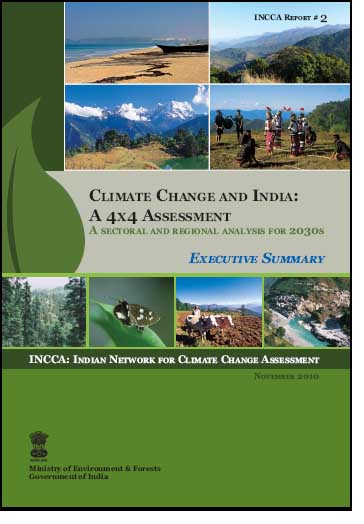
India's Climate Prediction in 2030 and Manipur


Key results of 4X4 Assessment for 2030s and Manipur

Climatologically, the entire Indian region is divided into the Western Himalayas, North-west, North-east, Northern-central region, Eastern coast, Western coast, and the interior Plateau. The projected climate change information obtained from PRECIS driven by IPCC A1B scenario for these regional entities has been adapted for the present assessment as per the regions in focus.

For example, the projections for the Western Ghats refer to projections for the western coast. Projections for the coastal region represent the climate projections for the western coast and the eastern coast together. Projections for the Himalayan region represent climate of the Western Himalayas and projections for the North- Eastern region represent the climatological entity of the North-east including Manipur.

1. Temperature

PRECIS simulations for the 2030s indicate an all-round warming over the Indian subcontinent associated with increasing GHG concentrations. The annual mean surface air temperature is projected to rise by 1.7C and 2.0C in 2030s. Seasons may be warmer by around 2.0C towards the 2030s. The variability of seasonal mean temperature may be more in winter months. In Manipur the mean annual temperature is projected to rise by 25.80.8oC to 26.80.9oC in the 2030s. The rise in temperature with respect to 1970s ranges from 1.8C to 2.1C.

2. Precipitation

All the regions under consideration show a small increase in annual precipitation in the 2030s with respect to the baseline, that is 1970s. For Manipur, the average mean annual rainfall is projected to vary from a minimum of 940149 mm to a maximum of 1330174.5mm. The increase in the 2030s, with respect to the 1970s, is of the order of 0.3% to 3%.

3. Extreme temperatures

The analysis of the model runs indicate that both the daily extremes in surface air temperature, that is, daily maximum and daily minimum may intensify in the 2030s. The spatial pattern of the change in the lowest daily minimum and highest maximum temperature suggests a warming of 1.0C to 4.0C towards the 2030s. In North-Eastern region including Manipur, the minimum temperatures are likely to rise from 1.0C to 2.5C and maximum temperatures may rise by 1.0C to 3.5C.

4. Extreme precipitation

Extreme precipitation can be defined in terms of number of rainy days if it exceeds the currently observed average number of rainy days in a year (exceeding 2.5mm) as well as the volume of rainfall in a day if it exceeds a particular threshold. Currently, the frequency of rainy days is more in East and North-East India and less over western India.

The intensity of rainy days increases in a more warming scenario. In Manipur, the number of rainy days is likely to decrease by 110 days. The intensity of rainfall in the region is likely to increase by 16mm/day

5. Cyclones

Since 1986, a decreasing frequency in cyclones along the Eastern coast surrounded by the Bay of Bengal and the Northern Indian Ocean has been observed. The projected number of cyclonic disturbances along both the coasts in the 2030s is estimated to decrease with respect to the 1970s. However, cyclonic systems might be more intense in the future. For our State, we may get more intense cyclone in future.

6. Impacts on agriculture

Rice : Irrigated rice yields in Manipur may range between -10% and 5%, with respect to the 1970s, while the rain-fed rice yield may vary between35% to 5% with respect to 1970s.

Maize : Maize crop yields of the State are projected to reduce by about 40%.

Livestock productivity : The Temperature Humidity Index (THI), an index used to define losses due to thermal stress is highest in the months of AprilOctober with THI > 80 and is likely to remain under highly stressful conditions in 2030s reducing the milk productivity

Orange, Mango and Lemon etc.: The production these fruits in our State may decrease as increase in maximum temperature which led to a reduction in total cold season in the region. With increasing temperatures, it is anticipated that there may be an all-round decrease in fruit production and the line of production may shift to higher altitudes.

7. Natural ecosystems and Biodiversity

It has been concluded that the forest vegetation type of the four eco-sensitive regions are vulnerable to projected climate change in the short term, that is, in 2030s, even under a moderate climate change scenario (A1B). The impacts vary from region to region. In North-Eastern region including Manipur which has much of the dense forests in this region are the part of the Himalayan biodiversity hotspot. In this region, only about 8% of the 73 forested grids are projected to undergo change in the 2030s. The region is projected to see an increase of 23% in NPP (Net Primary Productivity) on an average.

8. Impact on Human Health

A qualitative assessment indicates that morbidity and mortality of the population in the regions under focus are likely to increase with warming temperatures and variable precipitation as they have direct as well as indirect effects. Direct effects can manifest as heat stress and indirect effects can be in terms of vector borne diseases, water borne diseases and malnutrition etc.

A quantitative assessment has been carried out for determining the transmission of malaria in the 2030s. The transmission windows have been determined in terms of (a) temperature as well as (b) temperature and relative humidity requirements for transmission. Even if the required humidity is not existing in the atmosphere the mosquito vectors seek microniche for their resting to get the required RH for survival.

The reason of almost similar projections in North-Eastern states may be due to prevalent high RH. The fate of the Manipur including the North-Eastern region in the year 2030s is a likelihood that the windows of transmission of malaria may increasingly remain open for at least 79 months and may even remain open for a larger number of months (1012 months) in a year.

9. Water

The water resources in this study have been assessed in terms of water yield in the various river basins that are part of these regions. The water yield is the total surface runoff, which is usually a function of the precipitation, its distribution, evapotranspiration (ET) and soil characteristics. The water yield in the North-Eastern region including Manipur exhibits considerable spatial variability in the 2030s but is in line with the projected patterns of precipitation and evapotranspiration.

The northern parts of the North-East in the 2030s, with respect to 1970s, show a reduction in precipitation by 12%. The central portion of the North-eastern region shows an increase in precipitation by 0% to 25%. However, the majority of the North-Eastern region except for Mizoram, Tripura, Manipur and Assam shows an increase in the evapotranspiration in the 2030s. The increase in the water yield in Assam and Manipur is projected to increase by 40%.

10. Impact of Climate change on frequency of Droughts

The percentage change in the spatial distribution of Soil Moisture Deficit Index (SMDI) between the 1970s and 2030s has been used for defining the drought index. The weeks when the soil moisture deficit may start drought development (drought index value between 0 and -1) as well as the areas which may fall under moderate to extreme drought conditions (drought index value between -1 and -4) have been assessed.

There is an increase in the drought development for those areas of various regions that have either projected decrease in precipitation or have enhanced level of evapotranspiration in the 2030s. Similarly, the weeks belonging to moderate soil moisture stress show an increase in severity of drought from baseline to the mid-century scenario, which is self-evident. It is very evident from the depiction that the moderate to extreme drought severity has been pronounced for this Region where the increase is more than 20% in many areas despite the overall increase in precipitation.

11. Impacts of climate change on floods

Possible floods have been projected using the daily outflow discharge in each sub-basin as generated by the SWAT model, ascertaining the change in magnitude of flood peaks above 99th percentile flow in 1970s and in 2030s. Change in peak discharge equal to or exceeding at 1% frequency in the 1970s and 2030s for various regions indicates that the flooding varies from 10% to over 30% of the existing magnitudes in most of the regions. This has a very severe implication for existing infrastructure such as dams, bridges, roads, etc., in the areas and will require appropriate adaptation measures to be taken up.

What is our responsibility?

In the industrialized countries, due to technological advancement, they have developed high cost infrastructures to meet the challenges from Climate Change at their country level. But in our country like India due to its prohibitive cost, we are not able to install those technologies. Therefore to face the challenges of Climate Change in the years to come, the best option that we can effort is to plant more trees wherever it is possible. A tree in its life can sequestrate about one ton of Carbon dioxide and gives away the required oxygen for 10 peoples in a year.

Henceforth, for a clean future Environment, it is pertinent to plant more trees not only to save our wealth of the country, the Forests but for the future generation to come. To save our valued Forests, unless the acceptance from all sections of the society that we will be in an Environmental turmoil and facing from various climatic challenges by 2030, the law alone cannot be able to save our Forest. Therefore, it is our shoulder responsibility to save our dwindling Forest right now.

Let us save Forest and Plant more trees for a bright and prosperous future

Concluded ...


* N Munal Meitei wrote this article for The Sangai Express
The writer is Range Forest Officer and he can be reached at nmunal(at)yahoo(dot)in
This article was posted on November 19, 2011.


* Comments posted by users in this discussion thread and other parts of this site are opinions of the individuals posting them (whose user ID is displayed alongside) and not the views of e-pao.net. We strongly recommend that users exercise responsibility, sensitivity and caution over language while writing your opinions which will be seen and read by other users. Please read a complete Guideline on using comments on this website.


LATEST IN E-PAO.NET
  • 61st Hunger Marchers' Day #1 : Gallery
  • Violence in Manipur 2023-2026 : Timeline
  • Featured Front Page Photo 2026 #4: Gallery
  • Plain Flowerpecker sighted in Kasom Khullen
  • A mother's hope :: Poem
  • Condemns Killing of Naga Civilians
  • 1st day of Northeast India Space Workshop
  • Ticket to Hornbill 2026 Announced
  • Guns, guns everywhere in the hills
  • The King Who Caught a Bird : Konthoupa
  • JNIMS Paper II : The anatomy of a disconnect
  • GI-Tagged Natural Farming Could Turn NE
  • Condoles Passing of Huirem Ongbi Ibeni
  • Tree Plantation Drive 1.7 - Koirengei
  • NE Bands at Soundscapes of India
  • Make the JMG Report Public
  • Growing call to update NRC
  • Meira Rally 'No NRC, No Census' : Gallery
  • Day Dreaming of a Vision for a True Change
  • ChipCraft: RTL, IP Integration Course
  • Before the Census, Count the Future :: Poem
  • Khelo India Samvaad in Senapati
  • Induction Programme for Group-A & B Officers
  • Chumoukedima Councillors joined NPF
  • Questions people should raise
  • FC Reangdai Vs TRAU : Durand Cup : Gallery
  • Fast-Growing Tree Species: Link in Farming
  • Manipuri Sahitya Parishad Awards 2026
  • MTU Disaster Risk Reduction Club
  • Meeting with IDPs
  • Imphal-Guwahati Route continue on 3rd Day
  • Ambedkar Medical Aid Scheme Extended
  • 48-hour General Strike by JFD #2 : Gallery
  • Ghosts of Khadawmi: Numbers, Nationhood
  • Why Healthcare must be governed differently
  • Tree Plantation, "Loushangkhong Ningol Van"
  • Shobha Shukla "Justice unbound" : Book Rvw
  • Makeup meltdown during Monsoon
  • Science for Viksit Bharat at IBSD
  • Unresolved questions continue to hang
  • Exploring The Vanishing Self #7
  • Gen Z Rising: Pandora's Box Is Open ?
  • Northeast India Space Workshop 2026
  • Wanglembam Gobin: National Teachers Award
  • Broken heart :: Poem
  • Khemchand's bus & laity
  • Mumbai-Ghy as "Bhupen Hazarika Express"
  • Manipur Expeditionary Force, World War I
  • Waqf Amendment Act: An Analysis
  • 80th Independence Day @ Senapati : Gallery
  • Lanchenba : National record at 52nd Aquatics
  • The petition in Parliamentary democracy
  • Support for Children with Special Needs
  • Cracking down on protesters
  • 135th Patriots' Day @ Thangal Tomb : Gallery
  • India-Myanmar territorial exchange
  • The quiet alienation of living in Manipur
  • Babina wins AHPI Leadership Awards 2026
  • Brazil's favelas are reimagining HIV prevention
  • Foreign funds & responsible civil society
  • Dipholu release postponed
  • Taking the NRC demand to Delhi
  • 48-hour General Strike by JFD #1 : Gallery
  • Most neglected root causes of Manipur crisis
  • If the State moves on Agarwood now
  • The genesis of wars and conflicts :: Poem
  • Support to "No NRC, No Census"
  • The gem of transparent public procurement
  • Understanding the angst of the people
  • 35th Manipuri Language Day, 20 August
  • 'Beating of the Retreat' #2 : Gallery
  • Citizens of Manipur can reverse the downslide
  • Condolence Message : Niketu Iralu
  • Delhi Fashion Week 2026 launched
  • Community-based model transforming HIV
  • Eco-Sustainable 'Pine Home' Project
  • Assembly resolution of 2022: Update NRC
  • 77th Indian Republic Day #5 : Gallery
  • Engagement: SCGJWD Logistics & Transworld
  • 'Toy Gun' Featured in at BISFF 2026
  • India shrinking relationship with neighbours
  • A generation that undervalue experiences
  • Visit to displaced Naga families at Makhan
  • 8th Foundation Day of World Meetei Council
  • Rising call for NRC first, census later
  • 80th Independence Day @ 1st MR : Gallery
  • Wungphayo, Jianlungpou : Eming
  • Durand Cup : Touching the hearts
  • 2nd "Fields of Hope" at Bengaluru
  • The torchbearers of Independent Bharat
  • Working Women : Flight, hope & challenges
  • Time to focus on the hills
  • Abok Ki Singju: A Student Film
  • 80th Independence Day at 1st MR Ground
  • 80th Independence Day at Senapati
  • Peace begins with us :: Poem
  • Delhi Fashion Week 2026 Auditions
  • Reliance Foundation's Scholarships open
  • Remembering the martyrs of 1891
  • NEROCA Vs TRAU: Durand Cup #2 : Gallery
  • Manipur: The best place on earth If we change
  • Why Manipur Needs Special Economic Zone
  • 7-Week Free Cancer Screening
  • Safe Release of 3 Thadou Individuals
  • Cambodia's HIV success
  • Normalcy still a far cry away
  • 135th Patriots' Day @ Hicham : Gallery
  • In Search of Peace in Manipur
  • Manipur: NRC before it will accept Census
  • India-Myanmar border dispute & land swap
  • 135th Patriots' Day at Arunachal
  • What is ABHA ?
  • How to eliminate the smell from home
  • Call to surrender all illegal arms
  • A Brief History of DM College
  • 2026 MaolKeki Memorial Scholarships
  • MU's intervention in Manipur's crisis
  • Hiroshima and Nagasaki revisited
  • Harshit Dhingaun: "Best Bollywood Host"
  • Organ Donation : The gift of life
  • LGBI Airport Advances Water Sustainability
  • Power supply : The rising need
  • Ibudhou Thangjing Haraoba #2 : Gallery
  • MKF Robert Memorial Internship Award
  • Indigenous Peoples Day @Chingmeirong
  • A bodybuilding saga from Ukhrul
  • World Elephant Day 2026
  • Endorsed Rio's letter to Home Minister
  • YAS Employee Association suspends Strike
  • Call to enlist Meiteis in ST category
  • Raengdai Vs TRAU - Durand Cup : Gallery
  • Youth Advocacy, Civil Society, & Peacebuilding
  • Panthung (The Last Spring Of Love)
  • The Price of Your Vote :: Poem
  • Manipuri custom into a green movement
  • 'Govt Must Pursue Census Deferment'
  • Flawed convention on violence against women
  • Lying in state since June 10
  • Wakol Laoba : A Philosophical Analysis
  • Moirang Phi: Living fabric of Manipuri Culture
  • 15 Reels- Preservation Digitisation in Italy
  • The Clotted Cream of Desire :: Poem
  • 5th Tree Plantation at Porompat
  • Resilience of Hope :: Poem
  • Handloom: Weaving the future of Viksit Bharat
  • Reaching out to Kangpokpi
  • Exploring The Vanishing Self #5
  • Lifetime Achievement Award for 4 Scientists
  • 13th CM Kang Tournament : Gallery
  • N Tomchou : Gold @ Asian Weightlifting
  • Shards of Home :: Poem
  • Entrepreneurship Development Program
  • Mohan Bhagwat & Gen Z
  • 77th Indian Republic Day #4 : Gallery
  • The chappals we leave behind
  • Takhellambam Rani: National Handloom Award
  • Col M Ranjit's book: Long journey west
  • FNTA (Frontier Nagaland) deal defies logic
  • 54 months to end AIDS and TB
  • Rs 1 crore flood relief drive in Assam
  • Issues and issues before Imphal
  • Mandengbam Jadumani @ Airport : Gallery
  • A consortium of scientific organizations
  • Extortion the Tyrant, Inflation the Demon
  • Hope :: Poem
  • 16th Foundation Day: Meghalaya Film Maker
  • Monsoon foot care
  • Growing call to weed out illegals
  • Naophangpa & the Boy Who Saved Kangla
  • Tingkuradin : Sacred text of Tingkao Ragwang
  • Nurturing Green Minds Youth & Eco Clubs
  • A tribute to Ruskin Bond
  • Ambedkar in Parliamentary ICU :: Poem
  • Cut to community-led service could spark HIV
  • Flood Relief initiative of Rs 21 Lakh
  • The service in healthcare : The human touch
  • Raengdai Vs Navy Durand Cup : Gallery
  • Policy Shift from Jhum to Sustainable Farming
  • Where the Earth Learns to Be Still :: Poem
  • MAGIZH : A homecoming, a legacy
  • Non-notified load shedding or technical issues
  • Japan can teach India on educational reform
  • Rs 21 crores for Assam flood relief
  • Guns going silent since 1997
  • Colonial Knowledge Production in NE India #24
  • Mitigating flood risks in Manipur
  • Young Talent Artistes Award 2026-27
  • Entrepreneurship Development Programme
  • Environment Day needs to stop playing safe
  • House in the Moonlight :: Poem
  • Building trust between communities
  • Naga Peace Process: Indo-Naga Talk: Timeline
  • Search 25 years of e-pao.net
  • Rain In July :: Poem
  • Remembering the Forgotten Army
  • YengjaKhige : Story on friendship released
  • Rani Gaidinliu Girls' Hostel in Pune
  • Expansion after election
  • Capacity Building Programme for Legal Aid
  • July 4 : Reaching out to CCpur
  • Exploring The Vanishing Self #4
  • NEROCA Vs TRAU: Durand Cup #1 : Gallery
  • China's Conflict Mediation in Myanmar
  • From Affection To Compassion :: Poem
  • Nature's parenting awards
  • Rs 11 Crore for Assam Flood Relief
  • CBSE Cluster-I Badminton Championship
  • Candle Light Vigil @Kangla : Gallery
  • Zomi Leaders meet CM @Imphal : Gallery
  • Honoring 3 Global Achievers from Manipur
  • Apou Koklou : Peipou, owner of Gods' Court
  • The attendance crisis in higher education
  • How does Govt view village volunteers ?
  • Initiating move to talk with the UNC
  • NE Book Fair Imphal @Lamphel #1 : Gallery
  • M Ranjit's book: The Long Journey West
  • Leinana Yomlibi - A Dynamic Musical Offering
  • Thailand's community-led HIV revolution
  • Mirabai Chanu won a gold medal
  • August Calendar for Year 2026 : Tools
  • North East India Fest @ London : Gallery
  • The Legacy & Power of the Meitei Nupi
  • Barun - 1st All-Women Vyas Ojapali Troupe
  • The Sino-Indian boundary question
  • A story of love, laughter, & society
  • Extortion & mud: Defining aspects of NH-37
  • Kang Khichri Chaba #1 : Gallery
  • Products of Artisans from Relief Camps
  • Colonial Knowledge Production in NE India #23
  • 135th Durand Cup: Manipur's football empire
  • 17th Anniv of Rabina & Sanjit: Gallery
  • Sinakeithei: Firearms for Kuki narco-terrorist
  • Protest - NEET 2026 leak : Gallery
  • Exploring The Vanishing Self #3
  • Kang Chingba @Kakwa, Singjamei : Gallery
  • That FB/X Post didnt come from Politician
  • Posts @ Life Sciences, Manipur Univ
  • Flag off: 135th Durand Cup @Sendra : Gallery
  • A rainy day @ Ima Keithel : Gallery
  • Ahingee Laan @ JNMDA #3 : Gallery
  • Early History of Manipuri Sahitya Parishad #3
  • The Forgotten Kings : A Hearthside Story
  • A gory slaughter :: Poem
  • Kang Chingba @Thangal Keithel : Gallery
  • Kang Chingba @Govindajee Temple : Gallery
  • 2004 Kangla Protest: Anti-Repression Day
  • 63rd Mr Manipur @ MU #5 : Gallery
  • Seasonal Fishes @Ima Keithel #3: Gallery
  • Early History of Manipuri Sahitya Parishad #2
  • Solo Dance: Wahengbam Debina #2: Gallery
  • Yumjao Lairembi Haraoba #2 : Gallery
  • 63rd Mr Manipur @ MU #4 : Gallery
  • Boy Who Dredged the Rivers: Taothingmang
  • Day 3 : Yaoshang Sports : Gallery
  • Sillam Sintha Jagoi @ATINGA : Gallery
  • 360° panoramic view of spots in Manipur
  • ANSAM Rally demanding justice : Gallery
  • 25th The Great June Uprising #2 : Gallery
  • Candle Light Vigil @ New Checkon : Gallery
  • Massacres perpetrated by Kukis during British
  • Remains of 6 Naga hostages @JNIMS: Gallery
  • Showcasing Manipur @Switzerland : Gallery
  • Chakan Gang-Ngai 2026 : Ooba Video
  • How to Break Manipur w/o Breaking Any Laws
  • HSLC Exam 2026 : Full Result
  • HSLC Exam 2026 : Pass % : Govt Schools
  • HSLC Exam 2026 : Pass % : Aided Schools
  • HSLC Exam 2026 : Pass % : Private Schools
  • HSLC Exam 2026 : Withheld-students
  • HSLC Exam 2026 : Compartmental candidates
  • HSLC Exam 2026 : Statistical Abstract
  • HSLC Exam 2026 : Important Information
  • Tronglaobi: 2 children laid to rest : Gallery
  • Final Merit List : Manipur Civil Services 2022
  • Killing of 2 children @ Tronglaobi : Gallery
  • PUCL Tribunal report: A shadow of partiality #3
  • PUCL Tribunal report: A shadow of partiality #2
  • PUCL Tribunal report: A shadow of partiality #1