


Fork in the road: Will we protect medicines that protect us or deal with incurable diseases?
Shobha Shukla *
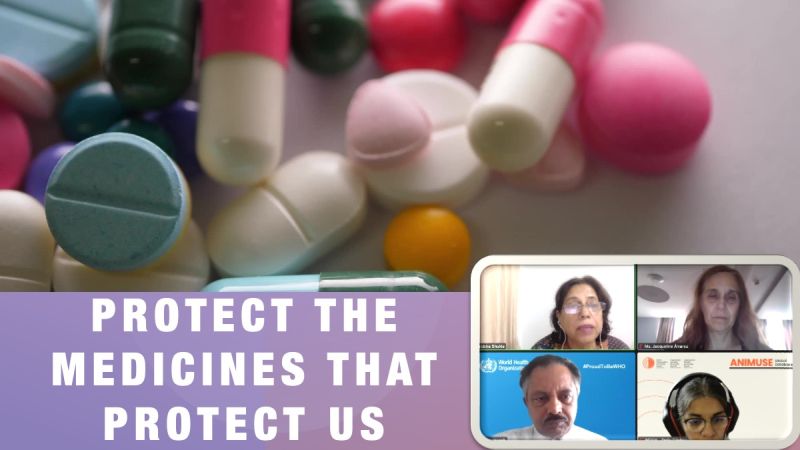
As the world observes the annual World Antimicrobial Awareness Week (WAAW) from November 18 to 24 2022, the spotlight is once again on preventing antimicrobial resistance that is not only devastating human health but also threatening the sustainability of our planet earth. Will we protect the medicines that protect us or lose them, resulting in diseases that become difficult or impossible to treat? "The answer my friend is blowing in the wind" as the legendary lyrics go.
What is antimicrobial resistance?
Antimicrobial resistance occurs when bacteria, viruses, fungi or parasites become resistant to, and hence no longer respond to the antimicrobials or drugs (antibiotics, antivirals, fungicides and parasiticides) used to treat the diseases caused by them. While antimicrobials are the backbone of modern medicine, their misuse and overuse in humans, animals and plants is driving the emergence and spread of antimicrobial resistance, making it difficult or even impossible to treat infections, increasing the risk of disease spread, severe illness and death.
Progress on all SDGs threatened by antimicrobial resistance
Antimicrobial resistance is not only causing a huge loss of human life (contributing to over 6 million deaths every year directly and indirectly) but also posing a crippling mountainous economic burden, said Dr Haileyesus Getahun, who is the Director, Global Coordination and Partnership on antimicrobial resistance, and also the Director, Quadripartite Joint Secretariat on antimicrobial resistance at the World Health Organization (WHO). Dr Getahun was the inaugural speaker at a recently concluded 2nd Annual Global Media Forum in lead up to 2022 World Antimicrobial Awareness Week.
According to a 2017 World Bank report, if no action is taken now, antimicrobial resistance is likely to cause an USD 1.2 trillion additional health expenditure per year by 2050, and push up to 24 million additional people (particularly in low-income countries) into extreme poverty by 2030. Dr Getahun warned that antimicrobial resistance can directly affect progress on at least 6 of the 17 UN Sustainable Development Goals and can be linked indirectly to the remaining 11 as well.
Inequity also ails antimicrobial resistance
As the burden of antimicrobial resistance is greatest in low-resource settings, particularly in sub-Saharan Africa, and South Asia, it is not only a global public health problem, but also an issue of health equity and socioeconomic development, says Thomas Joseph, Head, Antimicrobial Stewardship and Awareness Unit at the World Health Organization (WHO). Along with ensuring a rational use of antibiotics “having access to clean water, sanitation, and hygiene, as well as good infection prevention and control measures, such as hand washing and vaccination, are vital in the fight against antimicrobial resistance,” he emphasises.
One Health approach is vital to address antimicrobial resistance
Humans, animals, plants and environment are continuously interacting and sharing with each other the microbials that have become resistant to drugs. So curbing antimicrobial resistance to protect human lives is not possible without protecting the health of our plants, animals and environment.
Jacqueline Alvarez, Chief, Chemicals and Health Branch, Economy Division, United Nations Environment Programme (UNEP), rightly points out that “Antimicrobial resistance is both, a cause and a consequence of the triple planetary crisis of climate change, biodiversity loss and pollution and chemicals.”
Dr Getahun calls for increased financing, political advocacy and coordinated global action to better respond to the converging threats of antimicrobial resistance and the climate crisis before it is too late.
Scott Newman, Senior Animal Health and Production Officer for Asia and the Pacific at the Food and Agriculture Organization of the United Nations (FAO), stresses upon preserving antimicrobial efficacy while we sustain food and agriculture production.
"Loss of biodiversity and ecosystems, as well as of natural habitats for agriculture, has also led to an increase in antimicrobial use, and pathogen spread. We have to ensure that emergence and spread of antimicrobial resistance is slowed down across all food sectors (animal husbandry and agriculture). We need to switch to sustainable food production, by promoting climate-smart agriculture, agro-ecological approaches, nature-based solutions, and efficient and safe production methods biosecurity and disease prevention and control," added Scott Newman.
Antimicrobials cannot compensate animal husbandry practices
"Antimicrobials are also used to prevent infections in animals apart from their use in treating animal diseases. But we must note that antimicrobials used in animals to prevent infections, must not be done to compensate poor animal husbandry practices. Rather antimicrobials should only be used for infection prevention in animals, who are at risk of acquiring a specific infection or in a specific situation where infectious disease is likely to occur, if the drug is not administered," cautioned Delfy Gochez, Data Management Officer, antimicrobial resistance, and Veterinary Products Department, World Organisation for Animal Health (WOAH).
Jane Lwoyero, Technical Officer on antimicrobial resistance at the WOAH shared that in Africa, and globally, WOAH (World Organisation for Animal Health)’s strategy is followed by them to promote prudent use of antimicrobials. "We have also disseminated farm biosecurity guidelines in Kenya and Ethiopia to curb antimicrobial resistance. We also helped pilot the information and alert system for substandard and falsified veterinary products (during October – December 2021)" said Jane. "WOAH is also promoting the use of vaccines as an alternative to irrational use of antibiotics for Theileriosis in cattle and Typhoid in humans."
Improve the basics to strengthen antimicrobial stewardship
"To contain antimicrobial resistance, we need better evidence, and evidence-backed actions; we need to improve diagnostic stewardship; we need to have good infection control practices in the hospitals and the community; and without these pillars – we cannot truly practice antimicrobial stewardship," said Dr Kamini Walia, Senior scientist, Indian Council of Medical Research.
"Diagnostic stewardship and infection control – both are significant challenges in our country because we have sub-optimal investment in the healthcare system, and we do not have good diagnostic laboratories in secondary and primary healthcare services (and good laboratories are essentially limited to tertiary care health services). Being a tropical country, we have a significant burden of infectious diseases. This further leads to sanitation and hygiene problems, and most of the antimicrobials which are prescribed are to compensate for poor sanitation and hygiene – both in communities and in hospitals. So, if we really want to make progress on antimicrobial stewardship we have to improve the basics, such as improving diagnostics, infection control, and other necessary actions," rightly added Dr Walia.
"Studies done in India show that almost half of all prescriptions audited in the study, were of antibiotics, and over 55% of antibiotic use was prescribed for uncomplicated respiratory symptoms. More alarmingly, less than 1% of these patients had any microbiological diagnosis done. Many of these prescriptions show the levels of inappropriate use or higher use of antibiotics. Also, over two-third of these drugs are available over the counter. We need to prevent over-the-counter dispensing of antimicrobials," said Dr Prapti Gilada-Toshniwal, senior microbiologist and founder head of UniLabs.
"We need stronger and practical antimicrobial stewardship programme for our context and ground realities so that we can effectively promote the appropriate use of antimicrobials (including antibiotics), improve treatment outcomes, reduce antimicrobial resistance, and decrease the spread of infections caused by multidrug-resistant organisms," added Dr Prapti Gilada-Toshniwal. "We need to boost diagnostic capacities at all levels. Access to accurate, rapid, and point-of-care diagnostic facilities for different diseases and conditions, should be scaled up."
Clock is ticking
All this points towards the urgency of tackling antimicrobial resistance through an integrated and comprehensive response involving all the sectors, what is now referred to as the One Health approach. In the words of Dr Getahun, “One Health approach is an integrated, unifying approach that aims to sustainably balance and optimize the health of people, animals, and ecosystems. It recognizes that the health of humans, domestic and wild animals, plants, and the wider environment (including ecosystems) are closely linked and interdependent.”
Collaborative efforts are needed that involve public health, agriculture, animal husbandry and environment sectors, as well as whole of society approach, to effectively address the challenge of AMR and make economies resilient to its impacts.
* Shobha Shukla wrote this article for e-pao.net
The writer is the award-winning founding Managing Editor and Executive Director of CNS (Citizen News Service)
and is a feminist, health and development justice advocate.
She is a former senior Physics faculty of prestigious Loreto Convent College and current Coordinator of Asia Pacific Regional Media Alliance for Health and Development (APCAT Media).
Follow her on Twitter @shobha1shukla
This article was webcasted on November 26 2022.
* Comments posted by users in this discussion thread and other parts of this site are opinions of the individuals posting them (whose user ID is displayed alongside) and not the views of e-pao.net. We strongly recommend that users exercise responsibility, sensitivity and caution over language while writing your opinions which will be seen and read by other users. Please read a complete Guideline on using comments on this website.


