
TODAY -
✦
Iyek Ipee — letters Lonsum — final consonants Cheitap — vowel signs Khudam — marks
Full keyboard, E-pao keys and help ›

The Karen people's pursuit for survival in Northern Thailand

Jiten Yumnam *
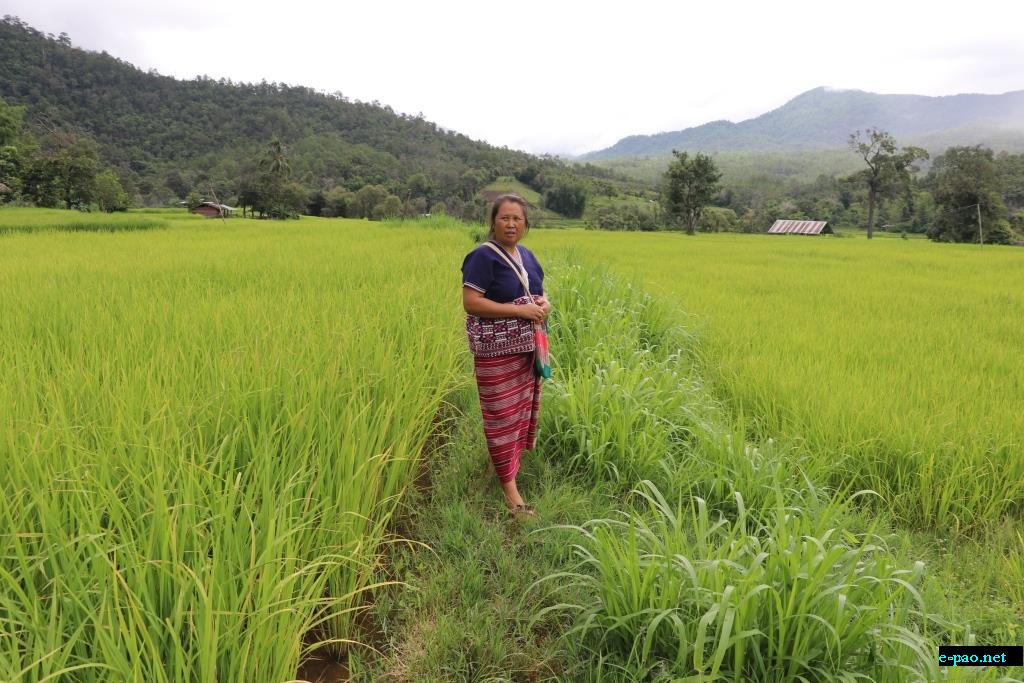
 A Karen woman in Huay E-Khang Village
A Karen woman in Huay E-Khang Village


An uphill winding road amidst lush green thick forest in Northern Thailand led us to the Huay E-Khang Village, bounded by Rice fields and wooden thatched houses. The village inhabited by the Karen people, a major indigenous people of Thailand, is a two hours' drive from Chiang Mai City. The visit, as part of an exposure visit of indigenous youths attending the Third International Indigenous Youth Conference, organized by the Asia Pacific Indigenous Youth Network, from 5-9 September 2016 in Chiang Mai, familiarized us to unique way of life of Karen and changing realities within.

The Karen people, who also inhabit parts of Burma, Laos and Thailand, practiced rotational farming, cultivating rice and seasonal vegetables. The traditional system of governance still exists to regulate the functioning of social and cultural affairs, in full conjunction with modern village administration, more to regulate Government's development activities. The Karen people practices Animism, Buddhism and Christianity as their religion.

An interaction with Huay E-Khang villagers reveals some of the principal concerns and affirmative initiatives among the Karen people. Challenges include the Thai Government's non-recognition of their rights over their land, the continued expansion of forest areas for conservation measures and repression of community leaders defending their rights and land. Additionally, a complex survival challenge of Karen refugees from Burma persists. A change in traditional agriculture practices is also evident. A remarkable effort to propagate the Karen's traditional knowledge of Karen among youths is visible.

A shift in traditional agriculture practices is clear in Huay E- Khang village, indicating adverse impacts of globalization in sustainable management of land and forest. Agriculture practices used to be organic earlier, but commercial agriculture embedded with chemical use and pursuance of cash crops threatens traditional agriculture practices, such as rotational farming, characterized by sharing of community labour and establishment of village rice banks for seeds sharing and use during food shortages among villagers. Agriculture expenses increased and villagers started borrowing to sustain agriculture, indebting many villagers.

Climate change and decrease in rainfall further led to difficulty to grow traditional crops, impacting food sovereignty and food produce. Many families finds extremely difficult to support education for children, while also compelling youths to migrate in cities and smaller towns, such as in Chiang Mai, Chiang Rai, Bangkok etc, for employment avenues. The situation led to much worry among the elders, compelling them to seek solutions.

As one of mitigation measures, villagers of Huay E-Khang imposed restriction on plantation of cash crops and the use of chemicals in rotational farming areas. Another affirmation action is conscious efforts to transmit traditional knowledge to their younger generations.

Noraeri Thungmueangthong, a Karen woman leader shared her people's effort, especially women to impart traditional knowledge to the younger generations, including Karen language, script and their history of their land. Karen youths are encouraged to go with their parents to learn the spiritual connection and sustainable management of their land and forest, such as tying of umbilical cords of new born babies to trees for forest protection.
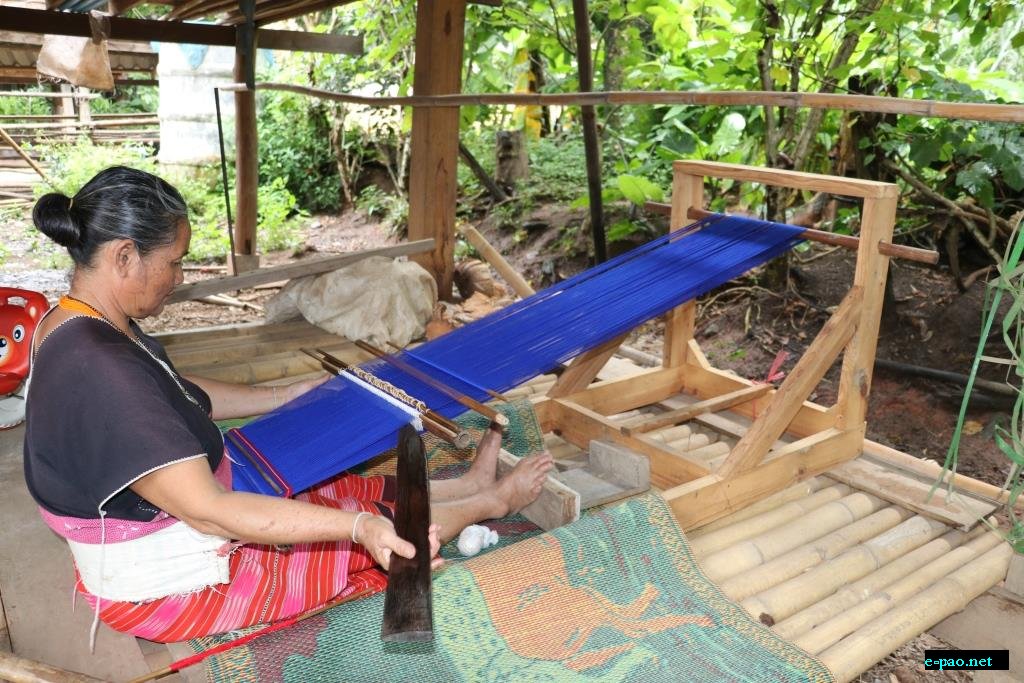
 A Karen woman weaving traditional clothes
A Karen woman weaving traditional clothes


Legends of Karen believed the spirits and health of the person with the umbilical cord grows along with the trees and the forest. Preservation of seeds, learning traditional cooking with recipes from nearby forest, learning folk stories, weaving of traditional clothes is educated to younger generations. Karen dances, ceremonies, traditional medicinal practices, handicraft are imparted as well.

The efforts help inculcate Karen youths to value importance of transferring the traditional knowledge for protection of their community land, cultures and their identity and further to feel proud to be a Karen, in learning the rich values of their traditional knowledge, practices and other cultural and natural heritages.

Ms. Noraeri continues to share that in Thailand, land belongs to the State and the collective right to land is still not recognized. Karen people are still striving for the recognition of their communal land title. One of the serious challenges among the Karen people is the continued effort of the Government of Thailand to expand forest land areas, for conservation measures and setting up of national parks, without recognizing her peoples' rights over forest. On 7 September 2016, the Central Administrative Court of Thailand pronounced a ruling insensitive to Karen peoples' traditional way of life and relationship with their land.

The matter relates to an incident of arsoning of around 100 Karen homes and their barns, in Pong Luk Bang Kloy village in Phetchaburi Province in May 2011 by officials of the Department of National Park (DNP) and the Ministry of Natural Resources and the Environment (MNRE), Government of Thailand, on charges of 'encroaching' on Kaeng Krachan National Park .

The court, based on a complaint filed by Karen villagers, ruled that the park officers of DNP had the right to enact measures to take down structures in the park under Article 22 of the 1961 National Park Act. In its verdict, the court blamed Karen people for encroaching upon forestland to expand their community and farms. The court also barred the community from returning to the land, which the Karen considered as belonging to their ancestors.

The Karen had been living in Ban Bangkloi Bon in Phetchaburi's Kaeng Krachan district for generations, until the evictions began and before the National Park was established in 1981. "The ruling that the Karens had 'encroached' forestland only affirms the general lack of understanding on our histories and sustainable traditional practices and livelihoods," said Wut Boonlert of the Karen Network for Culture and Environment. The court, however, ordered DNP to pay each Karen villager whose house was burned down 10,000 Thai Baht in compensation for property loss. The meager amount is incommensurate to compensate for destruction of homes, way of life and their survival dependence on their land and forest.

The court verdict also comes amid widespread forced evictions and criminalization of Karen people and other hill tribes in forest areas across Thailand. In July 2014, three Karen families had their lands 'reclaimed' by the Forest Department and in October, 37 Karen were convicted on pretext of encroachment and illegal logging for cutting trees to build their homes in northern Mae Hong Son province. Such cases have increased exponentially after the ruling National Council for Peace and Order (NCPO) enacted Order No. 64/2014 to increase forest cover at the expense of indigenous peoples rights.

Community leaders striving for protection of indigenous peoples' way of life are also subjected to direct infringement of their human rights. One Pawlajee "Billy" Rakjongcharoen, who had demanded justice for the Karen communities evicted from the National Park, remained disappeared since April 2014. He was apprehended for possession of illegal honey.

The main suspect in his disappearance has been acquitted and even promoted within the Department. The Park Chief had already been under investigation for the killing of another Karen activist in 2011. Interventions from UN human rights offices such as the Office of the High Commissioner on Human Rights to secure his release or locate his whereabouts remained unheeded . Mr. Billy continues to remain traceless as time goes by.

The Thai Government's effort to repatriate Karen refugees back to Burma is another concern among the Karen refugees, especially those fleeing the conflict afflicted Karen State of Burma. The majority of the refugees are indeed women and children. The refugees were granted temporary refuge in three locations, Mae U Su, Mae Salit and Nong Bua. Since their arrival, local Thai authorities have repeatedly pressured the refugees to return home despite evidence that their land back home is still conflict ridden and unsafe for their return . Karen organizations, including the Karen Women Organization issued appeals against forcible repatriation of Karen refugees, back to a heavily land mined war zone in Burma.
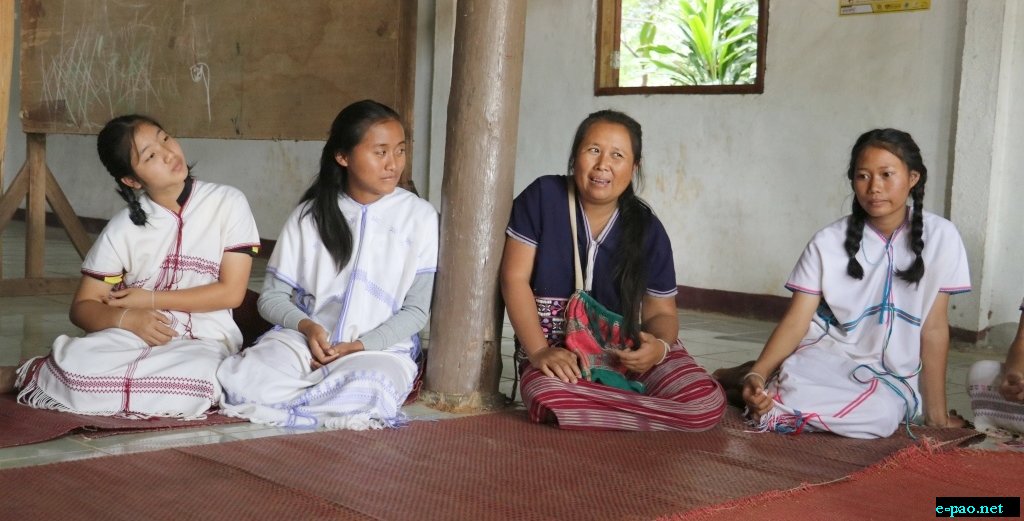
An adept listening of Karen young girls to an elder's sharing on Karen cultures and way of life at Huay E-Khang village, Northern Thailand, 8 September 2016


A strong determination to pursue their way of life, free from undue interference, is easily discernible among the Karen. The Karen people and other indigenous peoples of Thailand have an arduous task to ensure a full recognition of their rights over their land, forest and resources. The recognition of self-determined development and sustainable management of their land, forest and resources, as provisioned in UN Declaration on the Rights of Indigenous Peoples, 2007 and deepening all efforts to prompt the Thailand Government to recognize indigenous peoples' rights remains a venerable challenge.

Security of indigenous human rights defenders requires utmost attention. The political resolution of conflict situation in Karen State in Burma is crucial to end much uncertainty among Karen refugees in Thailand and to realize their aspirations to return home in a safe and secure environment. The exertions to recognize traditional community land ownership and sustainable management of their land and natural resources, including through a conscious effort to propagate traditional knowledge among the Karen younger generation is a critical step towards reinforcing assertion of their inherent survival rights.

The forces of globalization are overtly strong possessing ability to wipe out indigenous cultures and identity, especially by destroying their land and resources. In this onerous situation, the exemplary role of Karen people, especially women to deepen community responsibility to revitalize indigenous knowledge and traditional practices among their youths in a fast globalizing world, with their sacrifices provides succinct hope for realization of Karen peoples' self-determination over their land, lives and future.


* Jiten Yumnam wrote this article for e-pao.net
The writer can be contacted at mangangmacha(AT)gmail(DOT)com
This article was webcasted on November 11, 2018.


* Comments posted by users in this discussion thread and other parts of this site are opinions of the individuals posting them (whose user ID is displayed alongside) and not the views of e-pao.net. We strongly recommend that users exercise responsibility, sensitivity and caution over language while writing your opinions which will be seen and read by other users. Please read a complete Guideline on using comments on this website.


LATEST IN E-PAO.NET
  • Exploring The Vanishing Self #21
  • Violence in Manipur 2023-2026 : Timeline
  • December Calendar for Year 2026 : Tools
  • Tangkhul Film- Kazik - Tribal Frame
  • The Art of a Peaceful Retirement :: Poem
  • Don't blame the local brew
  • Proposed delimitation exercise
  • Skin care tips for men
  • Seasonal Vegetable @Ima Keithel #1: Gallery
  • Remembering Kayamuddin- Manipuri literature
  • Manipuri Development Council, Assam
  • Response to Seilen Haokip's argument #1
  • Ngamkhuhring Anal - Man of Year Asia 2026
  • Books Before Bullets :: Poem
  • Delay in justice - biggest blow to democracy
  • Rushing to private hospitals and media
  • Hiyang Tannaba @ Salampat #1: Gallery
  • Condolence: Archbishop Menamparampil
  • When ethnic labels become weapons
  • Meetei Ethnographic for ST Status
  • Naken Tha - A Soulful Masterstroke
  • Maps of memory : Solo Art Exhibition
  • Constitution Day at Manipur University
  • Lessons to learn from the liquor tragedy
  • ISL : NE United Vs SC Delhi #1: Gallery
  • The Suspension of Operations Agreement
  • Santhali - Angen, Karbi - Kangbo Aloti
  • 69th National General Assembly of AITSA
  • 6th Schedule in the Constitution of India
  • Medical education- led by medical teachers
  • Park The Car, Find Your Feet-I :: Poem
  • Stop the backward slide, move forward
  • Catholic Valley Schools Sports #2: Gallery
  • 40th Anniversary of BAMCHAS at Sylhet
  • Celebrations Amidst Chaos
  • Khundrakpam Artists - Executive Committee
  • Electric Vehicles' Battery: Job Opportunity
  • Elimination of Violence Against Women
  • Peace requires truth, not anonymity
  • Food one eats, the water one drinks
  • Chali-Saba - Kang Ningol Palli #2: Gallery
  • 2nd ISAC International Lyric Competition
  • Cave Within Me, Asoh , Red Panda
  • Enoong Ngallamdai Selected at KIFF 2026
  • Manipur Cherry Blossom Fest 2026 Concluded
  • When Imphal appears in a New York Court file
  • World AMR Awareness Week 2026
  • Time for voters to lay down agenda
  • Accounts of education of Maharaja Chandrakirti
  • 123rd birth anniv of Potsangbam Tomal Singh
  • Manipur Cherry Blossom Fest 2026 at Mao
  • Tripura�s Kokborok Film Khaani
  • Ngaijarakpa Kuireda- A Soaring Meitei Ballad
  • Rural Entrepreneurship in Manipur
  • Reading Books :: Poem
  • Unfolding human tragedy : Alcohol poisoning
  • Exploring The Vanishing Self #20
  • Ningol Chakouba @ UK : Gallery
  • Chiw Phran, Sikaisal, Mau- Assam Film
  • Understanding the Naga situation
  • One new moon night :: Poem
  • Reviewing the reviewers of Sonia's book
  • Assam LitArt Festival 2026
  • Untold story: Journalism in Ukhrul
  • The Shepherdess of the Glaciers- Ladakhi Doc
  • The Mask in the Hall :: Poem
  • A nostalgic look back at Catholic School
  • Condolence : Demise of Sapam Kunjakeswor
  • Community support defeating drug-resistant TB
  • Viksit Bharat Challenge Track @ MU
  • Emergence of new political parties
  • Ningol Chakouba- Mapam Lamdam #2: Gallery
  • Manipuri Film 'Interlude' at KIFF 2026
  • Sum of All Choices - Journey from Addiction
  • In Sikkim, a beekeeper prioritises bee health
  • Digi-SAPNE 3.0 Launched in Manipur
  • Friendship :: Poem
  • India's Dual-Track Dilemma: Myanmar junta
  • Shedding the baggage of the past
  • Ningol Chakouba @ Bangalore : Gallery
  • Ningol Chakouba uncelebrated
  • Nungole - Tripuri Tribute to Meitei Melodies
  • Aaini Onnai explores Bodo heritage
  • From Gamgiphai to Senapati : Innocent lives
  • Manipur Dairy wins IDF Innovation Award 2026
  • Laughing :: Poem
  • Time for the youngsters to emerge
  • Now you can search in Meitei Mayek ...
  • Ningol Chakouba 2026 at Guildford, UK
  • National Press Day 2026: Gallery
  • Last Cherry Blossom : Ka Jingshemphang
  • Manipur Crisis: Means to untie 'Tangled Web'
  • From Mind to Reality :: Poem
  • Environmental action no longer optional in AMR
  • In a state of conflict for over 3 years
  • 24 hrs general strike [Nov 16]: Gallery
  • 3rd Ningol Chakouba 2026 in Bengaluru
  • Mizo Film 'Rini Leh Rina' : Edge of Limbo
  • Delhi sleepwalks through Naga-Kuki conflict
  • Misrepresentation of Thadou War
  • Ningol Chakouba in UAE
  • Literary Excellence with Book Releases
  • Electoral Literacy Club launched
  • Killings, violence continue
  • Sinai Camp Debacle: Unmasking Rotten Core
  • Kashopapu brings Sumi folklore, wisdom
  • Nashon Pikna @ 31st Int'l Film Fest Kerala
  • Myanmar, Manipur & price of engagement
  • Legal Services Day, 2026 observed
  • Conference on 'Bridging Technoscience'
  • Condemns Ongoing Violence
  • Environment for education
  • Exploring The Vanishing Self #19
  • 228th Bheigyachandra @Nabadwip #4: Gallery
  • The Quiet Shelter of Her Smile :: Poem
  • Swedish filmmaker Mattias in Manipur
  • Competition: Are we striving together ?
  • Love in various guises :: Poem
  • Declining fertility rates & population policy
  • The King Who Bound Gods & Men: Story
  • Ningol Chakouba celebrated at Bangalore
  • The Way of the Mithun: Tribal Frames Manipur
  • Is Japan the answer for Nagaland youth
  • Wakhalgee - Powering Maniwood Global Pulse
  • Call for early action on diabetes
  • Leitlangpui Music Festival 2026
  • Time to disarm everyone
  • Ningol Chakouba @ Imphal : Gallery
  • Tribal Frames Manipur 2026 opens in Imphal
  • Indo Bangladesh Art Exhibition
  • Can MU lead a fish revolution ?
  • One Awakened Man :: Poem
  • Jiribam : Cleanest town in Manipur 2026
  • Surviving in relief centres
  • Ningol Chakouba- Mapam Lamdam #1: Gallery
  • Significance of Ningol Chakkouba Festival
  • Ningol Chakouba at Mumbai
  • Visit to Darul Uloom Banskandi - Barak Valley
  • Why Gen Z men experience early hair loss
  • Russia-India eco and biz ties
  • Ningol Chakkouba Fish Fair: Gallery
  • Nongsum killings put fragile truce to the test
  • 6th North East Fiesta 2026
  • Unfinished promise to our children
  • Tribal Futures 3.0 : Day 7 Report
  • Market for storytellers & business of faith
  • Of noise pollution and more
  • Ningol Chakkouba Shopping #1: Gallery
  • Sinalei, Lansinngam, Yaipuba : Eming
  • Catholic School Alumni Reunite in Celebration
  • Chenglou Henbi- Full-On Kangleiwood Dance
  • Science behind 2026 Nobel Prize in Physics
  • Suffering of people living in red & buffer zone
  • Open Letter of Appreciation & Solidarity
  • The answered questions
  • Rally - End proxy war in Manipur #2: Gallery
  • Myth Behind E W Dunn's 1881 Survey Data
  • Warmest greetings on Ningol Chakkouba
  • Ajay Bhalla's soft power
  • A maiden on the roadside :: Poem
  • Martin Garrix to perform in Shillong
  • Agrivoltaics can put the farmer at centre
  • Creating the right ambience
  • Exploring The Vanishing Self #18
  • Enoong Ngallamdai Film Scenes: Gallery
  • Pat Jasan movement: Lessons from Kachin
  • Democracy :: Poem
  • Bharat Ratna LK Advani Ji at 100 !
  • Abhigyanm Stages 2 Productions
  • Health & Rights Observatory exposes gaps
  • Scholarship Exam in B'desh (Manipuri areas)
  • We can begin again :: Poem
  • MoU to Strengthen Academic Cooperation
  • Awareness Program on role of MSCW
  • Food Safety Drive at Thoubal
  • What nature knows that humanity has forgotten
  • The Gati Shakti mindset : Thinking citizen-first
  • Ineffective Govt, unthinking people
  • Ibudhou Nongda Lairen Haraoba #2 : Gallery
  • Roadmap for peace: Abrogate SoO Agreement
  • Former Minister Mohd Alauddin passes away
  • 11th General Elections of NESOJ
  • Conference: Modern Day Sustainable Science
  • Aizawl International Half Marathon 2027
  • Skin detox tips to follow post-Diwali
  • Politics of peace pact
  • Declassified Files : Death of Hijam Irawa
  • Raas Leela @Tirupati Dasara : Gallery
  • Narengbam Maxson: National Cycling Record
  • Common things about Chikungunya & Dengue
  • How public can preserve crime scene evidence
  • Educational empowerment: 12 years of access
  • Cutting off Imphal-Ukhrul road
  • Naga Peace Process: Indo-Naga Talk: Timeline
  • Mera Chaorel Houba @ Kangla #2 : Gallery
  • Manipur: A Generation Growing Up in Unrest
  • Chemistry Nobel Prize - 2026
  • Tribal Futures 3.0 : Day 1 Report
  • For future generations :: Poem
  • District Level Peace Committees
  • Thakhaisida Manipuri Theatre
  • Run up to the Assembly elections
  • Tharoi Yonbigi Macha #1: Gallery
  • fulN AmsuH mnorama :: Seireng
  • Clarification on Liangmai position
  • An Appeal for Peace & Reconciliation
  • Targeting the State or the people ?
  • Condemns ongoing killings in Manipur
  • Harshit Dhingaun Meets Meghalaya CM
  • More or less a free for all in the hills
  • 228th Bheigyachandra @Nabadwip #3: Gallery
  • First Convocation of NIELIT held
  • Thingujam Diana: Sabre Int'l Referee Exam
  • Compassion or something else ? :: Poem
  • Ecology Day 2026 is for safety of organisms
  • 9 Dan and Laxmi Maa
  • Detection of Breast & Cervical Cancer
  • Rising call to abrogate SoO pact
  • Rally - End proxy war in Manipur #1: Gallery
  • Exploring The Vanishing Self #17
  • Indigenous Leaders Convene in New York
  • Contribution of Wetlands towards Agriculture
  • National Unity Day 2026
  • When the sirens stop :: Poem
  • ESTIC 2026: Connecting Science with Viksit
  • Hotel Cachar Club, erstwhile Silchar Polo Club
  • Yenkhong Tamba : Mera Houchongba : Gallery
  • Raas Leela @Mysore Dasara : Gallery
  • Delhi Fashion Week: Award at Needle Fest
  • TRAU vs Navy: 135th Durand Cup: Gallery
  • 5 Manipuris : World Top 2% Scientists
  • Reinvent Northeast Season 9 at Russia
  • 48-hour shutdown: Sunurok Killing #2: Gallery
  • Featured Front Page Photo 2026 #5: Gallery
  • Justice for 6 Liangmai Nagas #3 : Gallery
  • 7th Rongmei Freshers' Meet in Delhi
  • Workshop: Conservation of Manipuri Pony
  • Pot Lannaba : Mera Houchongba #1: Gallery
  • 228th Bheigyachandra @Nabadwip #2: Gallery
  • Significance of Mera Hou Chongba festival
  • 'Soil Intelligence' is reshaping infrastructure
  • Noise protest: Manipur Violence : Gallery
  • 48-hour shutdown: Sunurok Killing #1: Gallery
  • Langban Tha Katchaba @Haying #2 : Gallery
  • Catholic Valley Schools Sports #1: Gallery
  • Digital Revolution & MK Binodini Devi
  • Yaoshang Thabal Competition #5: Gallery
  • Yumjao Lairembi Haraoba #3: Gallery
  • Sushila & Bichu @Airport #2: Gallery
  • 'Meeyamgi Khollao Khongchat' #2 : Gallery
  • Mera Chaorel Houba @ Kangla #1 : Gallery
  • 61st Hunger Marchers' Day #3 : Gallery
  • Manipuri Calendar for year 2027 : Download
  • Meiteilon not Tibeto-Burman language: Rvw
  • Sushila & Bichu @Airport #1: Gallery
  • US-Manipur Digital Archiving Workshop
  • Heikru Hidongba @Bijoy Govinda : Gallery
  • 130th Irawat Anniversary : Gallery
  • Manipur Mesopotamia Force WWI : Gallery
  • Yaoshang Thabal @Khurai #2: Gallery
  • Naothingkhong & Pitanga #1: Hearthside Story
  • Little Flower School, 1973 batch : Gallery
  • Study: Social Worker on Counselling Practice
  • To our star Tamo Vicky, Vikram Chongtham
  • Langban Tha Katchaba @Haying #1 : Gallery
  • Colonial records: Hill Areas, 1891-1947
  • Census 2027 for Manipur deferred
  • Read Meitei Mayek news in romanized English
  • Relevance of NRC, 1951 for immigrants
  • Final Merit List : Manipur Civil Services 2022
  • PUCL Tribunal report: A shadow of partiality #3
  • PUCL Tribunal report: A shadow of partiality #2
  • PUCL Tribunal report: A shadow of partiality #1
  • Jump Start
    DBS Imphal SubSite | Readers Mail | Editorials | Education Announcements | Essay | Exclusive Event | Flash - Audio Visual | Incidents | LFS Imphal SubSite | News Timeline | Poetry | Opinion | Sports | Rock Concert | RSS | Top Stories | Wathi Jugai